






























Which Fabrics Work with Rotary Sublimation Heat Transfer Machines? A Guide to Polyester, Nylon, Blends, Cotton, Linen and Silk
The suitability of fabrics for rotary sublimation heat transfer machines is often reduced to a single question: “Can it be printed on?” In actual production, however, what truly needs to be confirmed are the fiber composition, fabric finishing, pattern colors, order volume, and the customer’s requirements for wash and rub fastness.The same machine can process suitable polyester fabrics continuously, but due to differences in fabric composition or finishing processes, issues such as a grayish tint, changes in hand feel, or substandard colorfastness may arise.
This article discusses the conventional disperse dye sublimation process.When heated, disperse dyes penetrate hydrophobic synthetic fibers and become fixed within the fibers upon cooling; if the fabric lacks suitable conditions for dye acceptance, simply increasing the temperature or extending the dwell time will not fundamentally resolve the issue. The following criteria are intended for preliminary screening prior to procurement and prototyping; the final results should still be based on actual fabric sample testing.
Terminology:
DTF involves first printing the design onto a transfer film, which is then transferred to the fabric via heat pressing; DTG involves printing directly onto the garment or fabric using a printhead. These are distinct processes and should not be confused.
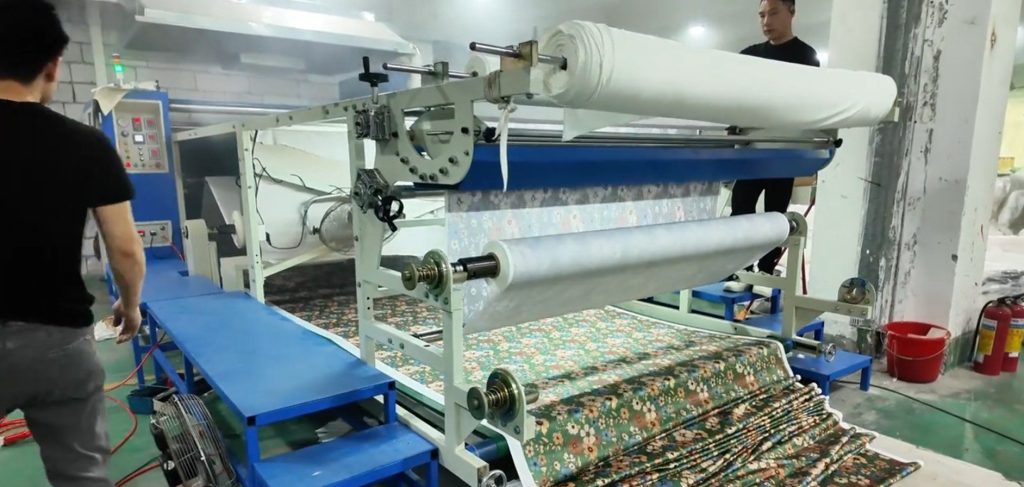
Figure 1: Actual footage of a Zhishang Factory sublimation roller transfer machine performing continuous transfer on polyester fabric.
I. Polyester: The Most Sublimation-Compatible Conventional Fabric
100% polyester is suitable for stable sublimation roller transfer and is the most compatible standard fabric for this process.Polyester is a type of synthetic fiber with a hydrophobic structure suitable for disperse dyeing; therefore, it typically yields more consistent results in terms of color rendering, pattern clarity, and hand feel.After transfer, the design is embedded within the fibers without forming a noticeable resin film on the surface. This is why polyester sublimation is commonly used for sportswear, quick-dry clothing, flags, home textiles, and advertising banners.
Industrial Production Capacity Reference:
Taking the ZS-BD 2200 mm industrial configuration as an example, the standard parameters listed on the official website indicate a production speed of 880–2000 m/h, corresponding to drum sizes of 1000 mm, 1200 mm, and 1500 mm.This range is intended to illustrate the capabilities of continuous production equipment and does not mean that the highest speed can be used for every order; actual effective production capacity must still be evaluated in conjunction with fabric weight, fabric width, design, upstream and downstream processes, and operating conditions. For more configurations,see the ZS-BD Digital Roller Transfer Machine
.
Temperature cannot be determined by a single fixed value.The actual process window is influenced by fabric weight, weave, surface finish,sublimation ink
, sublimation transfer paper
, and drum dwell time. Equipment temperature, fabric feed speed, and dwell time should be determined through prototyping based on the specific equipment model, design, and fabric; parameters from other factories cannot be directly applied.Before mass production, conduct test runs using the customer’s actual fabric and final design, and record the temperature, fabric feed speed, transfer paper, ink, color results, and changes after washing.
Before purchasing, confirm the following:
whether the care label or supplier’s composition report specifies “Polyester”;whether the fabric surface has silicone softeners, water-repellent agents, antistatic agents, or other post-treatment finishes; and whether there are different lots or different background colors within the same order. Correct labeling does not guarantee that the print will be acceptable; post-treatment finishes and lot variations may still affect color development and colorfastness.
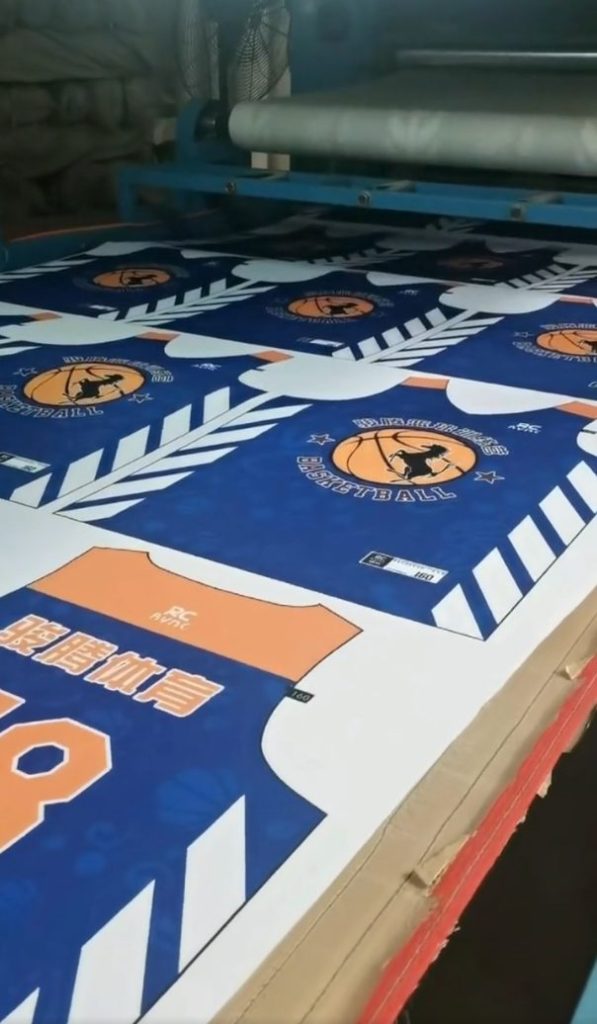
Figure 2: Actual photo of printed apparel fabric samples after continuous fabric delivery.
II. Pure Nylon: Production is possible; samples are required for blended fabrics or those with special finishes
Nylon (Polyamide) is a fabric type that Zhishang frequently handles in practice. Pure nylon is suitable for dye-sublimation roller transfer printing; however, weave density, elasticity, coatings, and post-treatment can still affect color and hand feel.When customers provide blended nylon, composite fabrics, or materials with unknown finishing processes, we must first obtain information on composition and heat resistance before confirming feasibility through prototyping.
Even for pure nylon, the actual fabric should be used to verify color, pattern edges, shrinkage, hand feel, and the colorfastness required by the customer. Different weights and post-finishing treatments may yield different results; in particular, for coated nylon or composite fabrics, existing parameters cannot be directly applied simply because the fiber names are the same.
III. Polyester Blends: Typically Stable at 50% or Higher; Sample First for Less Than 50%
Based on Zhishang’s practical production experience, production is generally more stable when the polyester content reaches 50% or higher; a content below 50% does not mean printing is absolutely impossible, but variations in color, fastness, and hand feel will be more pronounced, so a sample must be produced for confirmation.In addition to the blend ratio, factors such as yarn structure, base color, weight, and post-treatment must be considered; decisions regarding an entire order should not be based solely on the composition sheet.
- Polyester content of 50% or higher:Generally more suitable for production scheduling, but the base color, surface finish, and the customer’s colorfastness standards must still be confirmed.
- Polyester content below 50%:Produce a sample first; do not accept bulk orders based solely on the composition ratio; color saturation and wash fastness may be insufficient.
- If the composition or finishing process is unclear:Request a composition sheet and conduct physical testing first; for materials that do not meet standards, switch toDTF transfer printing, DTG direct-to-garment printing, or other suitable processes.
IV. Pure Cotton and Pure Linen: Switch to DTG or DTF; do not use conventional sublimation printing
Cotton and linen are natural cellulose fibers. Conventional disperse sublimation dyes lack stable dyeing and fixation conditions, causing patterns to remain on the surface and increasing the risk of color fading after washing or friction. Therefore, pure cotton and pure linen are not suitable as production fabrics for conventional sublimation roller transfer.Even if surface coloring is achieved through coating or pretreatment, it will alter the fabric’s hand feel, breathability, and durability, and the results cannot be directly equated with those of polyester sublimation.
Neither 100% cotton nor 100% linen are suitable production fabrics for this sublimation process.Depending on the order specifications, you may switch to DTG (Direct-to-Garment) printing or use DTF (Direct-to-Film) transfer printing for heat transfer. DTG requires matching textile inks and pretreatment, while DTF adds a transfer film layer; the hand feel and wash durability must still be confirmed through prototyping of the final product.
V. Silk: Conventional sublimation is not suitable; DTG or DTF may be evaluated
Silk is also unsuitable for this disperse dye sublimation roller transfer process.Silk is sensitive to high temperatures and tension; direct heat transfer may affect its luster, hand feel, and fiber strength. Depending on the product type, DTG direct-to-garment printing or DTF transfer printing can be evaluated, but the compatibility of inks, pretreatment, and fixation processes must be confirmed by the equipment and consumables supplier.
The ink, pretreatment, and fixation requirements for DTG on cotton differ from those for DTG on silk; production feasibility cannot be determined based solely on the equipment name. When purchasing silk printing equipment or seeking a processing facility, request that the provider supply samples of similar silk fabrics, colorfastness test results, and detailed instructions for actual post-processing.
VI. When Receiving New Fabrics, Complete Verification in Three Steps
Step 1: Verify Composition and Finishing
Prioritize checking the care label, the supplier’s composition sheet, and the finishing process instructions. Even with the same composition, different softeners, water-repellent coatings, or resin finishes can lead to varying transfer results. Do not rely solely on feel to distinguish between polyester, cotton, or blends, and never decide to produce an entire batch based on a single label.
Step 2: Conduct a controlled burn test for preliminary screening if necessary
The burning test should only be used as an auxiliary method and cannot replace laboratory composition testing. If testing is absolutely necessary, cut only a small scrap of fabric and conduct the test in a well-ventilated area, away from flammable materials, and in compliance with on-site safety requirements; do not handle burning fabric samples directly with your hands, and avoid inhaling smoke from synthetic fibers.Polyester typically exhibits shrinkage, black soot, and hard residue; cotton and linen produce an odor similar to burning paper and leave loose ash; while silk emits the smell of burning hair. The final composition should still be determined based on the supplier’s test results or an official test report.
Step 3: Create a sample using the actual fabric and record the results
Conduct sample printing using the customer’s final fabric, actual pattern dimensions, and the corresponding ink and transfer paper.Prototyping records should include, at a minimum, fabric composition and weight, surface finish, design colors, equipment temperature, fabric feed speed, transfer paper and ink model numbers, post-transfer color, shrinkage, hand feel, as well as wash and rub tests conducted in accordance with order specifications. Only when all these results meet the requirements should mass production be scheduled.
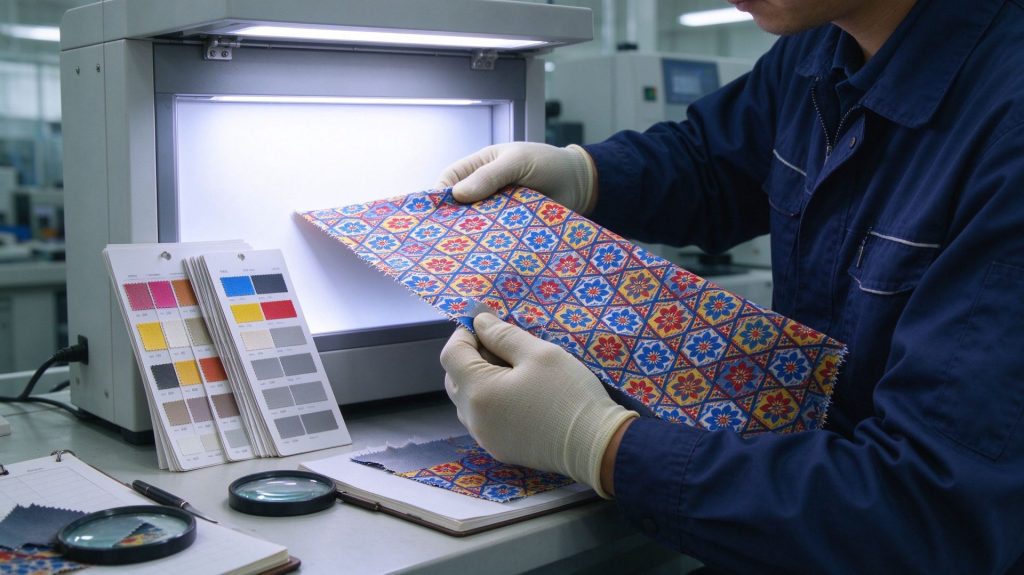
Figure 3: Zhishang Factory verifying sample colors and fabric appearance under standard lighting.
Quick Reference Guide for Six Fabric Categories
| Fabric Type | General Sublimation Assessment | First, confirm | Production Recommendations |
|---|---|---|---|
| 100% Polyester | Typically the best match | Finishing, weight, and base color | Confirm color and colorfastness using the actual fabric |
| Pure Nylon | Can be produced | Heat resistance range, coating, and intended use | Adjust parameters using actual fabric and complete washing and abrasion tests |
| Polyester blends (≥50%) | Generally easier to stabilize | Base color, yarn structure, finishing process | Mass production following sample production in accordance with the customer’s colorfastness standards |
| Polyester blends (less than 50%) | Produce samples first, then make a determination | Base color, pattern depth, acceptance criteria | Bulk orders cannot be accepted based solely on fiber composition |
| 100% cotton/100% linen | Not compatible with standard dye-sublimation | Applications and customer requirements | Switch to DTG direct-to-garment printing or DTF transfer printing |
| Silk | Not compatible with conventional dye-sublimation | Fiber strength, luster, and colorfastness | Evaluate DTG or DTF and verify compatible inks and pretreatment |
Equipment Selection and Prototyping Experience
Since 2003, Zhishang has been engaged in the R&D and manufacturing of heat transfer and digital printing equipment, which has been exported to numerous countries and regions. Whether a fabric is suitable for mass production cannot be determined solely by a composition label;During the actual equipment selection process, we combine fabric samples, design dimensions, target colors, daily production capacity, post-processing requirements, and customer acceptance criteria to conduct test prints on the appropriate machine models. To understand equipment structure and configurations, please refer tothe garment-grade sublimation roller transfer machine and the ZS-BD digital roller transfer machine;If you are still comparing different printing methods, you may want to read“The Differences Between Sublimation Roller Transfer and DTF” and “How to Choose Between a Roller Transfer Machine and a Flatbed Heat Press.”
Frequently Asked Questions
A customer requests sublimation printing on 100% cotton T-shirts. Can we accept this order?
Conventional disperse sublimation is not suitable for 100% cotton. Even if a coating or other pretreatment allows the design to adhere temporarily, the hand feel, wash durability, and mass production stability must be re-evaluated.A more appropriate approach is to evaluate cotton fabric processes—such as DTF transfer printing or DTG (direct-to-garment) printing—based on the order requirements, rather than directly applying polyester parameters.
The label says “100% Polyester,” so why does the color still look grayish?
The grayish tint may be caused by softeners, water-repellent agents, or other post-treatment processes applied to the fabric’s surface; it may also be related to the ink, transfer paper, equipment temperature, fabric feed speed, or design settings. First, confirm the finishing process with the fabric supplier, then create comparison samples using fabric from the same batch;Do not simply try to solve the problem by increasing the temperature, as excessive heat may cause shrinkage and changes in hand feel.
How should I adjust settings if nylon fades after washing following a heat transfer print?
A separate process window must be established for nylon; polyester parameters cannot be directly copied. Record the temperature, dwell time, and ink-transfer paper combination, and evaluate the results through washing, rubbing, and color-fastness tests. If the fabric has a coating or special finish, you must also confirm whether these treatments affect dye uptake and fixation.
Can a blend with approximately 50% polyester be mass-produced?
Based on Zhishang’s production experience, fabrics with a polyester content of 50% or higher are generally more stable; however, for fabrics with exactly 50% polyester, it depends on the fabric weave, shade, post-treatment, and the customer’s acceptance criteria. Always complete sample production and fastness tests before scheduling mass production; do not accept bulk orders based solely on the percentage.
What is the most suitable printing method for silk scarves?
Conventional disperse or sublimation printing is not suitable for silk. Depending on the product’s form, evaluate either DTG (direct-to-garment) printing or DTF (direct-to-fabric) transfer printing, and require the supplier to confirm the corresponding ink, pretreatment, color fixation, and colorfastness performance; different silk fabrics must be verified using actual samples.
Author: Zhishang Equipment and Process Team (Dongguan Zhishang Technology Co., Ltd.)
The content of this article was compiled by the Zhishang Equipment and Process Team based on equipment trials, continuous fabric production, and practical experience. It is intended to help procurement personnel develop a framework for fabric selection and does not replace fabric standards, process parameters, or batch acceptance plans confirmed by the client. Results may vary depending on the fabric manufacturer and equipment conditions; verification using actual samples must be completed before formal production.
To learn more about the company’s manufacturing capabilities, factory facilities, and equipment portfolio, please visitthe “About Zhishang” page.