
































Sublimation Transfer Paper
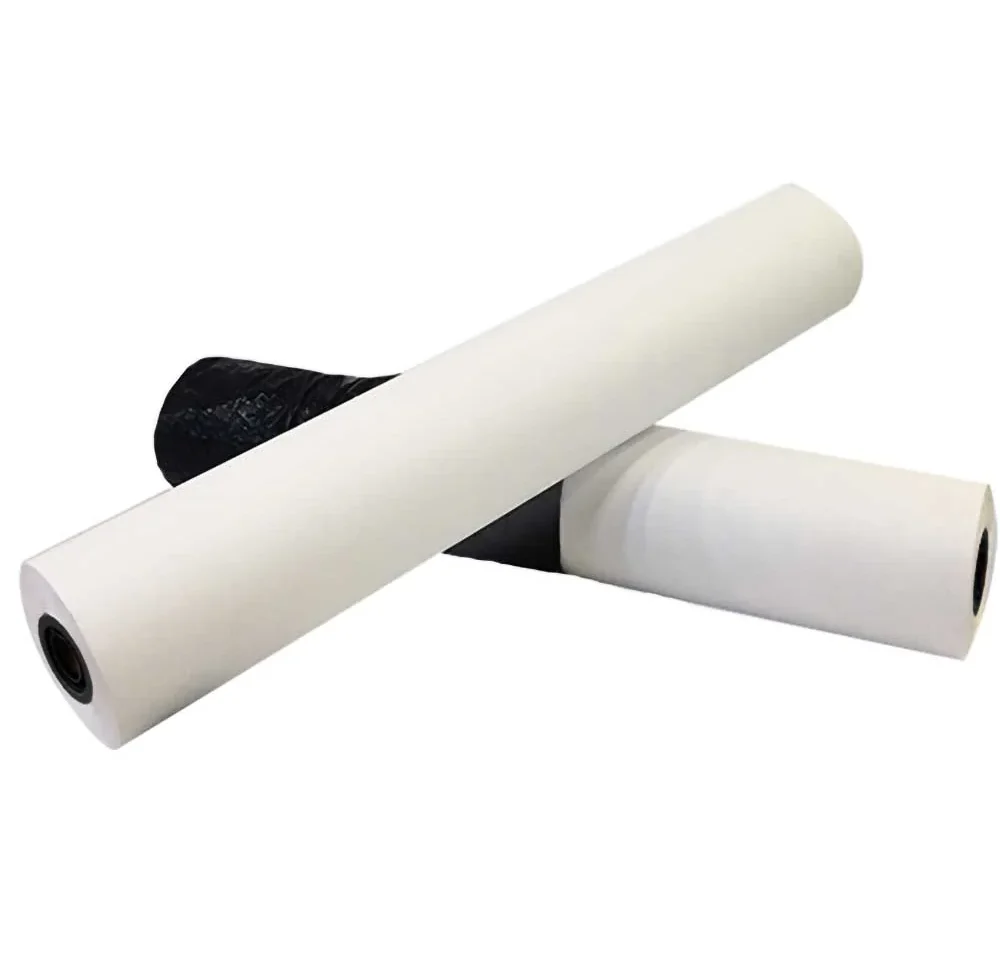
Sublimation transfer paper is standard transfer paper designed for use with sublimation printers. It typically comes in weights of 70–100 g/m², widths of 610–1,620 mm, and lengths of 100–500 m, and can be customized to meet the specific requirements of the customer’s equipment and order.
 Sublimation & Heat Transfer Consumables
Designing Equipment to Meet Actual Production Goals
Sublimation transfer paper is used to carry designs printed by a sublimation printer; these designs are then transferred to suitable synthetic fabrics and garment pieces via roller transfer or flatbed heat pressing.The paper itself does not determine the final result; rather, it works in conjunction with the ink, printer, print width, ink density of the design, and the unwinding, winding, and transfer equipment to influence color accuracy and paper feed stability.
Standard Specifications
| Applications | Sublimation Transfer |
|---|---|
| Standard Grammage | 70–100 g/m², subject to confirmation based on requirements |
| Standard Width | 610–1,620 mm, customizable based on equipment and order requirements |
| Standard Length | 100–500 m, selectable as needed |
The products on this page are positioned as standard dye-sublimation transfer paper and are not marketed as quick-drying or adhesive paper. If other features are required, they must be confirmed separately prior to purchase; do not rely solely on the product name.
How to Match Printers and Inks
The transfer paper should match the maximum print width, paper feed method, and actual design width of the dye-sublimation printer. Excessive width increases trim waste, while insufficient width may fail to cover the order; roll length should be selected based on continuous production, roll change frequency, and storage conditions.The printable surfaces of the sublimation ink, printer, and paper should also be verified together; conduct tests before switching suppliers or batches.
What to Focus on During Testing
- Print a test image containing fine lines, small text, gradients, and dark blocks.
- Observe ink absorption, drying, curling, feed stability, and edge quality.
- Verify color transfer, pattern integrity, and backing paper removal on the corresponding roller Transfer Machine.
- Check the color, hand feel, shrinkage, and colorfastness performance according to order requirements using actual synthetic fiber fabrics.
Moisture, creasing, or wrinkled edges on the paper can all cause paper feed abnormalities. Do not judge the quality of the paper based solely on basis weight or a single transfer rate figure; always rely on test results obtained using the actual equipment, ink, and fabric.
Storage and Shelf Life
Paper rolls should be stored in a dry environment at room temperature, away from high temperatures, high humidity, direct sunlight, heavy pressure, and damage to the edges. The shelf life is typically indicated on the packaging or batch label; generally, the paper can be stored for several years. Before use after long-term storage, inspect the surface, coating, and edges, and reprint a test pattern.
Points to Confirm Before Purchasing
- The brand, model, and maximum print width of the dye-sublimation printer
- Required roll length, basis weight, and roll orientation
- Ink consumption for common designs, drying method, and workshop environment
- The width and production speed of the subsequent roller transfer machine
For consumable compatibility, please refer tothe guide on the compatibility of sublimation inks and fabrics; for equipment and process selection, please refer tothe comparison between roller transfer machines and flatbed printers.
How to Determine Roll Specifications
First, confirm the printer’s maximum print width, the actual design width, and the unwinding and rewinding methods, then select the roll width. The roll width should cover the design and allow for the margin required for stable paper feeding; a roll that is too wide will only increase trimming waste and inventory loss.For roll length, consider the length of continuous orders, roll change frequency, operating height, and warehouse space; longer rolls may not be suitable for all production facilities.
Records to Keep Before Batch Use
It is recommended to record the paper roll batch number, basis weight, width, length, printable side, printer model, ink batch number, environmental conditions, and test print results.When changing paper or ink batches, use the same test pattern to compare ink absorption, drying, curling, paper feed, transfer integrity, and color. If any of these factors show a noticeable change, conduct a small-batch validation first; do not proceed directly to mass production.
Configured for stable mass production
- For use with dye-sublimation printers
- Custom specifications available upon request
- For dye-sublimation transfer on synthetic fabrics and garment patterns
Matching Processes to Material Properties
Expand Modules According to Production Line Requirements
Frequently Asked Questions About “Sublimation & Heat Transfer Consumables”
01 Are you a manufacturer or a trading company?
We are a manufacturer of printing equipment based in Dongguan, Guangdong. Founded in 2003, we handle all aspects of our business—from research and development to precision machining, assembly, and commissioning—in our own factory. Our equipment has been exported to 83 countries and regions.
02 How do I choose between sublimation drum transfer and digital printing?
Sublimation drum transfer is suitable for continuous mass production of synthetic fabrics, offering high design fidelity, consistent colors, and low unit costs; for small-batch orders with multiple designs, digital printing may be a better option. Send us your fabric and design, and we’ll provide recommendations based on a side-by-side comparison.
03 Can we produce a sample first to verify the process?
Sure. Please send us the fabric and design, and we’ll create a sample using the appropriate machine model. We’ll provide you with parameters such as temperature, pressure, and speed, along with a sample piece of fabric. Once you’ve confirmed the transfer results, we’ll finalize the machine model.
04 Can the web width, speed, and production capacity be customized?
Yes. The web width, speed, tension control, and unwinding, web guiding, and rewinding configurations can all be adjusted according to the fabric characteristics and production capacity goals.
05 What are the differences between cold peel, hot peel, and instant peel DTF Films?
The difference lies in the timing of peeling the film: for “cold peel,” you wait until the design has completely cooled before peeling; for “hot peel,” you peel while it’s still warm; and for “instant peel,” you peel immediately after pressing. Which method to choose depends on the type of film and the level of detail in the design.
06 How to Choose the Width and Thickness of DTF Film?
Select the width based on the printer’s maximum print width (common models are 300 mm and 600 mm), and select the thickness based on the design’s level of detail and the desired final texture; both can be customized.
07 How to Choose Between Ultrafine, Fine, Medium-Fine, and Coarse TPU Hot Melt Powder?
Ultra-fine powder has a smooth texture, making it ideal for intricate designs with many details and providing a softer feel; coarse powder is more cost-effective and suitable for large areas of solid color. Fine powder and medium-fine powder are the two most commonly used grades in everyday production.
08 What are the differences between the standard, high-concentration, and ultra-high-concentration versions of sublimation ink?
The three types differ in ink concentration: the higher the concentration, the less ink is used per unit area and the richer the color. For everyday production, use the standard version; if you’re looking for color saturation and ink savings, choose the high-concentration or ultra-high-concentration version.
09 How do you choose the weight of sublimation transfer paper?
The higher the grammage, the greater the ink absorption and the less likely the ink is to bleed, making it suitable for designs with high ink coverage and large blocks of color; lower grammage results in lower costs. Common grammages range from 70 to 100 g/m², and custom options are available upon request.
10 Why Is White Ink Used in DTF Printing?
First, a layer of white ink is applied to the bottom of the design to block the fabric’s natural color, which is why DTF can print vibrant, colorful designs even on dark-colored clothing.
11 Can consumables be customized? What is the minimum order quantity?
Customization is available. Width, length, thickness, grammage, capacity, and packaging specifications can all be customized to meet your needs; minimum order quantities and lead times vary by specification. Please send us the specifications you need, and we’ll confirm the details.
12 How should consumables be stored? Do they have an expiration date?
We recommend storing the product in a cool, dry place, away from direct sunlight and high temperatures. Use paper products as soon as possible after opening the package, and use ink as soon as possible after opening the container. Please contact us for specific shelf life and storage conditions.
Inquire about the detailed specifications for this device
Please provide us with the material, roll width, speed, and target production capacity, and our engineers will evaluate the equipment configuration and delivery time.
- One-on-One Engineer Evaluation
- Configuration Plan Based on Materials and Production Capacity
- We will respond within one business day
You can also contact us directly
- Email [email protected]
- Phone +86 13713137075
- WhatsApp +86 13713137075