































Common Pitfalls When Purchasing Printing Equipment from China and How to Avoid Them
China is one of the world’s leading suppliers of printing equipment.For machines with equivalent specifications, quotes from Chinese suppliers are typically significantly lower than those from European and American manufacturers. The main differences lie in labor costs and the supporting supply chain—from printheads and control systems to frame sheet metal, China has a mature supporting supply chain; moreover, most small parts are standard components that buyers can also source in their own countries, so there is no need to worry about relying on a single source for spare parts.This is why an increasing number of textile printing contractors are choosing to source equipment from China.
However, low prices do not equate to low risk. The physical distance involved in cross-border procurement and information asymmetry provide opportunities for unscrupulous suppliers.From falsified specifications to mismatched manufacturing processes, from unresponsive after-sales support to payment fraud—falling into any of these traps results in losses that extend beyond the cost of the equipment itself to include months of production downtime and lost customer orders. Below, we break down the most common pitfalls in the procurement process one by one, providing actionable verification methods for each.
Pitfall #1: Unclear Supplier Identity
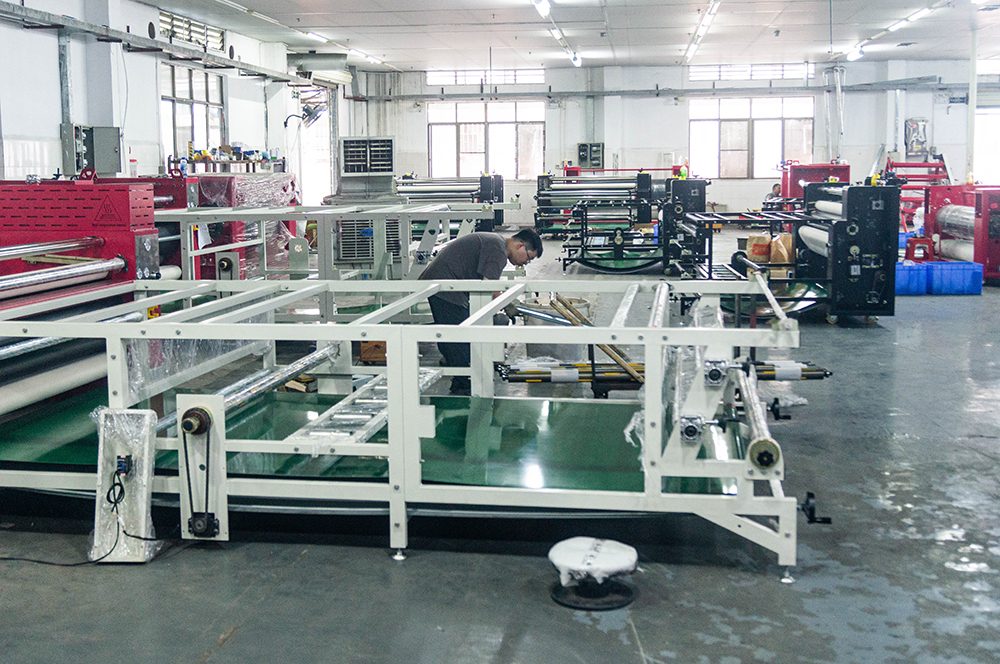
This is the most fundamental yet most critical issue. The supplier you’re dealing with could be a manufacturer with its own factory, a trader reselling goods sourced elsewhere, or even a shell company that disappears after collecting a deposit.
The risk with pure trading suppliers lies in the overly long chain of responsibility.When equipment malfunctions, the trading company must coordinate with the original manufacturer, which may not be located in the same city or even the same province. Response times are long, lines of responsibility are blurred, and when problems arise, the blame is easily passed back and forth among multiple parties. A common scenario in the industry is: the equipment manufacturer claims it’s a consumables issue, while the consumables manufacturer claims it’s an equipment issue—ultimately, no one takes responsibility.
There are several actionable indicators to help identify such risks. First, check the creation date of the supplier’s Alibaba store. If the store was established less than six months ago and has no transaction history or reviews, the risk is high. Second, ask the supplier to provide the full Chinese company name as listed on their business license, then verify it on the National Enterprise Credit Information Publicity System.Third, use satellite maps to verify the registered address. If the address is a residential building or apartment, it suggests the supplier may not have its own factory. Fourth, search for the company name on 1688, LinkedIn, and records of industry trade shows. A factory with genuine manufacturing capabilities typically has a presence on other platforms as well.
In cross-border procurement, it is not uncommon for buyers to suffer losses because they failed to conduct any verification before making payment. The common thread is that buyers only reviewed quotes and promotional materials without verifying the supplier’s true identity or confirming production conditions through on-site visits or video inspections.
The Second Type of Trap: Misrepresented Specifications and Mismatched Production Capacity
Among the technical specifications of printing equipment, the two most frequently exaggerated metrics are speed and precision.
Regarding speed,the “maximum speed” advertised by many suppliers is a peak value measured using 1Pass mode or even lower-precision modes—speeds that are simply unattainable in actual production.In the industry, a precision of 4Pass or higher is required to ensure color accuracy and colorfastness, while the actual speed at 4Pass is often only 50% to 70% of the peak value. Taking an 8-head model as an example, 1Pass is an ultra-high-speed mode, whereas 4Pass is the standard production mode; the actual speed difference between the two can be several times greater.Similarly, for a 16-head model, the manufacturer specifies 560 ㎡/h in high-speed mode, 420 ㎡/h in stable mode, and 380 ㎡/h in quality mode; the difference in throughput between these modes on the same machine is nearly 30%.Therefore, what you really need to clarify is the “stable speed for 4-pass or 6-pass,” rather than the peak speed.
In terms of precision,temperature control is another major problem area. Some low-cost machines are labeled as having a temperature range of 0–399°C, but their actual temperature control accuracy is insufficient, resulting in uneven heating plate temperatures and significant deviations from the set values. For heat transfer and sublimation processes, unstable temperatures directly lead to color discrepancies and substandard colorfastness.
The verification method is straightforward: request that the supplier provide test data for the stable speed at 4Pass—not peak speed—and include it as an appendix to the contract.Request 8 hours of continuous print samples, rather than samples produced in a single run. Have the supplier produce a sample on the spot using your own design files to check whether color transitions are smooth, fine lines are clear, and gradients show no discontinuities.
Pitfall #3: Process Mismatch
Digital printing is not a “one-size-fits-all” solution. Sublimation, direct-to-garment (DTG), DTF, and UV—these four mainstream processes each have their own suitable fabrics and order scenarios. Forcing a single machine to cover all processes will result in poor execution of every order.
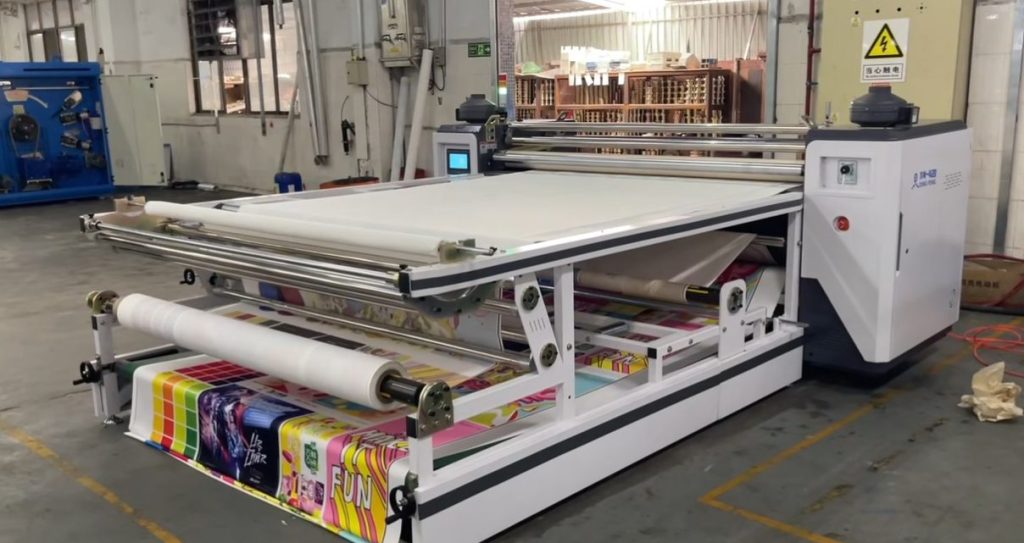
Sublimation specializes in polyester and synthetic fibers, making it suitable for sportswear, swimwear, and flags; it is typically paired with equipment such asroller heat press machines or sublimation printers. Direct-to-garment (DTG) printing focuses on 100% cotton and natural fabrics, making it ideal for small-batch, high-end customization.The advantage of white ink heat transfer (DTF) is its versatility across substrates—it works on nylon, leather, blended fabrics, and dark-colored materials—and is typically performed usinga DTF printerpaired witha powder shaker. UV printing is exclusively for rigid materials; it truly shines on acrylic, glass, metal, and PVC.
Many buyers are tempted by advertisements for “all-purpose equipment,” only to discover after purchase that colorfastness standards aren’t met for sportswear, costs are too high for 100% cotton, and the machine lacks UV capabilities for hard materials.The problem isn’t with the equipment itself, but rather with failing to clearly define—before purchasing—what types of orders you’ll primarily be taking on over the next one to two years.
How to Avoid This: Clearly outline your order structure—what fabrics you’ll primarily use, what types of designs, and the approximate order volumes. Then, have suppliers propose solutions tailored to your specific orders, rather than accepting a generic “one-size-fits-all” proposal. The most critical step is to run test prints using your own design files to verify that the finished products truly meet your clients’ acceptance standards.
Fourth Type of Pitfall: Unfulfilled After-Sales Promises
One of the biggest pain points in cross-border procurement is after-sales service. When equipment malfunctions, the supplier is thousands of kilometers away; remote guidance cannot resolve mechanical failures, and the cost and time required for on-site repairs are major issues.
A recurring scenario in industry reports is: “When the equipment breaks down, there’s no one to fix it.” Sales representatives are very accommodating during the procurement process, but their responsiveness plummets after payment is made. Some suppliers even subcontract after-sales service to third parties who are unfamiliar with the equipment, resulting in repeated delays with each repair attempt.
An even more insidious issue is the lock-in of consumables. Some suppliers offer equipment at very low prices, but require the use of their own brand of ink, transfer paper, and DTF Film—all of which are priced significantly higher than market rates.While the equipment is a one-time investment, consumables such as ink, transfer paper, DTF Film, and TPU Hot Melt Powder represent ongoing expenses that, when accumulated, often exceed the purchase price of the equipment itself. There is a widely accepted framework in the industry: the stability of consumables supply is more important than the one-time purchase price.
Prevention Strategy: Include after-sales service commitments in the contract.Clearly specify in the contract terms the response time for remote support, on-site service duration, and spare parts delivery lead times—never accept verbal promises. Prioritize suppliers with their own in-house service teams over distributors who outsource after-sales support. Clarify whether you’re allowed to source consumables from third parties, and ask if using third-party ink or transfer paper will void the equipment warranty.
Pitfall #5: Payment and Contract Risks
The choice of payment method directly determines the level of risk. Without third-party escrow, a bank wire transfer (T/T) means the supplier receives full payment before production even begins. If problems arise, the difficulty and cost of seeking recourse are extremely high.Alibaba’s Trade Assurance is an escrow service provided by the platform; funds are released to the supplier only after the buyer confirms receipt and satisfaction with the goods. This represents the most basic layer of protection in cross-border procurement.
However, Trade Assurance has its limitations.If any portion of the payment leaves the platform (e.g., transferred to a personal account, via Western Union, or in cryptocurrency), the escrow protection becomes completely invalid. Additionally, claims are subject to a time window; once this window expires, protection is no longer available.Minor quality downgrades—such as the use of cheaper materials that barely meet the specified parameters—are difficult to address through claims, as buyers must provide evidence of deviations by referring to the contract terms.
In terms of contracts, the most common issue is “discrepancies between samples and mass production.”A supplier may send a flawless sample to win an order, only to switch to cheaper materials or lower manufacturing standards during mass production. If the contract does not explicitly stipulate that “mass production must match the approved sample” and include breach-of-contract clauses, the buyer will be at a disadvantage when filing a claim.
Prevention strategy: Insist on using platform-escrowed payments and refuse any form of off-platform transfers.Clearly specify material specifications, manufacturing standards, packaging requirements, and acceptance criteria in the contract and purchase order. For large-value orders, you can commission a third party to conduct pre-shipment inspections against the contract and samples.One additional reminder: Most overseas buyers will use their own freight forwarders to pick up the goods, and some may have trading companies handle the procurement on their behalf. Therefore, before negotiating prices, confirm whether the counterparty is an end-user factory, a trading company, or a purchasing agent, as payment and delivery terms will vary significantly.
Frequently Asked Questions
How can you tell if a Chinese supplier is a factory or a trading company?
Ask the other party to provide the full Chinese name listed on their business license, then verify the scope of business operations on the National Enterprise Credit Information Publicity System. Use satellite maps to check the registered address; an address in a residential building typically indicates that the company does not own its own factory.Search for the company’s name on 1688, LinkedIn, and industry trade shows—genuine manufacturing factories usually have a broader online presence. You can also ask them to show you their production workshops and warehouses during a video call.
When sourcing printing equipment from China, what is the typical minimum order quantity (MOQ)?
Many Chinese suppliers accept orders as low as one unit, especially for standard models. Custom configurations or OEM/ODM orders usually have higher minimum order quantity requirements. However, a low MOQ does not necessarily mean low risk; the purchase price of a single piece of equipment can still be substantial, so thorough supplier verification is still required.
What should I do if I discover quality issues after the equipment arrives?
If you paid via Trade Assurance, you can file a dispute within the platform. If you paid via bank wire transfer without escrow, it is extremely difficult to pursue recourse. This is why third-party inspection before payment is crucial.
The cost and time involved in cross-border legal proceedings often deter small and medium-sized enterprises, and many companies ultimately choose to abandon their claims.
Is third-party inspection necessary?
For high-value orders, we strongly recommend commissioning a third party to conduct pre-shipment inspection. The inspection agency will examine the products against the contract and confirmed samples and issue a detailed report. This cost is negligible compared to the total price of the equipment but can prevent most quality disputes.
What We Do:Dongguan Zhishang Technology Co., Ltd. was founded in 1997, established a factory in Humen, Dongguan in 2003, and was officially registered in 2009. For nearly 30 years, we have specialized in the R&D and manufacturing of printing equipment, with products including roller heat press machines,flat-bed heat transfer machines, DTF printing and powder-shaking equipment, sublimation printers, and related consumables. Located in Daojiao Town, Dongguan City, Guangdong Province, the company possesses in-house R&D and production capabilities.If you are evaluating sourcing printing equipment from China, please send us your order details and intended use. We will first assess whether the process is suitable for your needs before deciding whether to provide a quote.
Summary
When sourcing printing equipment from China, avoiding pitfalls is key to saving money.Supplier verification is the first line of defense, parameter verification is the second, and contract and payment protections are the third.Do not skip verification steps just because prices are low; the cost of trial and error in cross-border procurement far exceeds the time spent conducting a few extra days of due diligence.Verify first, then pay; produce samples first, then move to mass production; include commitments in the contract, and ensure protections are built into the platform. By following these steps, you can reduce the risks of sourcing from China to a manageable level.