





























Dye-sublimation Ink
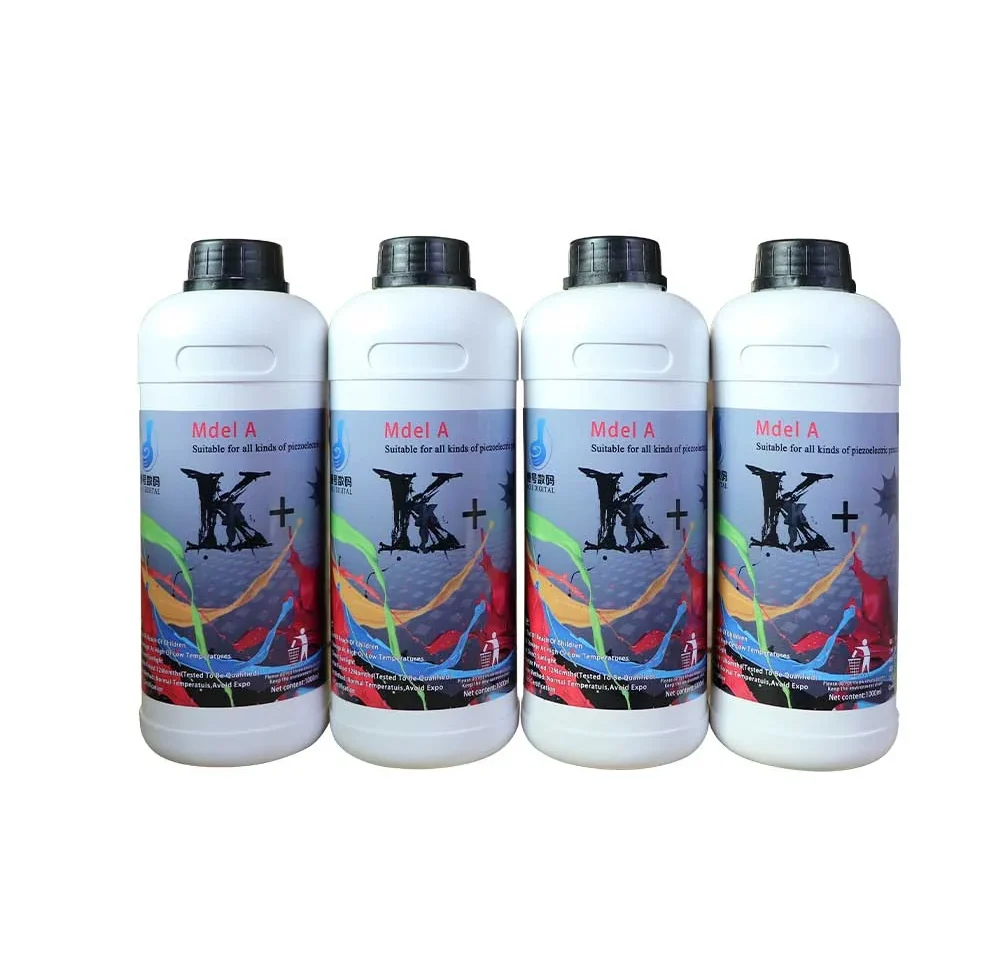
Sublimation ink is designed for use with sublimation printers; the printed designs are transferred to synthetic fabrics and garment pieces via heat pressing. It is available in three concentration levels—standard, high, and ultra-high—allowing you to select the appropriate option based on your equipment and color intensity requirements.
 Sublimation & Heat Transfer Consumables
Designing Equipment to Meet Actual Production Goals
Sublimation ink is designed for use with sublimation printers; the printed designs are heat-pressed onto synthetic fabrics and garment panels.Available in three concentration levels:Standard, High, and Ultra-High, allowing you to select the appropriate option based on your equipment and color intensity requirements.
Product Features
- Designed for use with dye-sublimation printers:Compatible with the dye-sublimation transfer process.
- Three concentration options:Standard, High Concentration, and Ultra-High Concentration—select based on color intensity requirements.
Specifications
| Applications | Dye-sublimation printers |
|---|---|
| Version | Standard / High-Density / Ultra-High-Density |
| Capacity | 1L / 5L (customizable upon request) |
Applications
Used for dye-sublimation transfer printing on synthetic fabrics, garment cut pieces, and similar materials.
Recommendations for Use and Storage
The ink version should be selected based on actual testing with the printer’s ink path, color configuration, transfer paper, and fabric.When changing or refilling ink, keep the ink lines clean and avoid mixing products from different systems; unused ink should be sealed, protected from light, and stored according to label instructions. Before mass production, it is recommended to check the printhead condition, color block uniformity, drying status, and color performance after sublimation.
Applicable Processes and Compatibility
Suitable for dye-sublimation printers, available in standard, high-concentration, and ultra-high-concentration versions, with standard capacities of 1L and 5L; select according to production needs.It is used by printing on dye-sublimation paper and then transferring the image to fabrics containing synthetic fibers; it is not the same as DTF coating ink.
Usage and Quality Control
When selecting a concentration, check the printer’s ink path, color configuration, transfer paper, and fabric simultaneously.Before using in bulk, test color swatches, gradients, small text, and coverage on dark colors; when changing ink, keep the ink lines clean and do not mix inks from different systems arbitrarily. Store in a sealed container away from light, and check color consistency and printhead condition after production.
Before purchasing, it is recommended to confirm
- the equipment brand, model, printhead or transfer machine configuration, as well as the specifications of existing consumables.
- Provide the target fabric, design, color, daily production volume, and desired hand feel; if necessary, send samples for testing first.
- For bulk orders, confirm packaging, storage, shipping, and restocking cycles to avoid color or adhesion variations caused by mixing different batches.
- Packaging, minimum order quantities, and delivery times are subject to the corresponding product page and final quotation.
How to Choose Between Standard, High-Concentration, and Ultra-High-Concentration Versions
Higher concentration does not necessarily mean better results; the choice should be based on the printer’s ink path, printhead condition, ink absorption capacity of the transfer paper, color configuration, and the color requirements of the target fabric.For orders with dark blocks, high saturation requirements, or designs with heavy ink coverage, focus on comparing ink deposition and drying times; for designs with fine details, grayscale, or small text, also check for edge bleeding. The final choice should be based on sample fabric results obtained using the same printer, paper, and fabric.
Color Stability and Daily Maintenance
Before mass production, create standard color swatches and gradient sample cards, and record the print mode, transfer temperature, speed, and paper batch number.Conduct daily inspections of the printheads, ink pathways, ink cartridge levels, and ambient temperature and humidity. When replacing ink, avoid directly mixing products from different systems. If colors suddenly change, check the printheads, color settings, paper, ink, and post-processing temperature in that order; do not immediately attribute the issue to ink concentration.
Application Limitations
Dye-sublimation transfer is more suitable for materials containing synthetic fibers such as polyester; pure cotton, silk, and linen are generally not suitable for direct dye-sublimation.For blended fabrics, nylon, or other materials, confirmation must be based on fiber composition, surface treatment, and actual test samples; fabric names alone are insufficient.
Related Equipment and Resources
Sublimation inks must be used in conjunction with printheads, transfer paper, color configurations, and post-processing roller transfer equipment. Before purchasing, confirm the ink concentration and usage based on print width, pattern coverage, and target production volume.
Configured for stable mass production
- For use with dye-sublimation printers
- Available in three concentrations: Standard, High, and Ultra
- Suitable for dye-sublimation transfer printing on synthetic fabrics and garment cut pieces
Matching Processes to Material Properties
Expand Modules According to Production Line Requirements
Frequently Asked Questions About “Sublimation & Heat Transfer Consumables”
01 Are you a manufacturer or a trading company?
We are a manufacturer of printing equipment based in Dongguan, Guangdong. Founded in 2003, we handle all aspects of our business—from research and development to precision machining, assembly, and commissioning—in our own factory. Our equipment has been exported to 83 countries and regions.
02 How do I choose between sublimation drum transfer and digital printing?
Sublimation drum transfer is suitable for continuous mass production of synthetic fabrics, offering high design fidelity, consistent colors, and low unit costs; for small-batch orders with multiple designs, digital printing may be a better option. Send us your fabric and design, and we’ll provide recommendations based on a side-by-side comparison.
03 Can we produce a sample first to verify the process?
Sure. Please send us the fabric and design, and we’ll create a sample using the appropriate machine model. We’ll provide you with parameters such as temperature, pressure, and speed, along with a sample piece of fabric. Once you’ve confirmed the transfer results, we’ll finalize the machine model.
04 Can the web width, speed, and production capacity be customized?
Yes. The web width, speed, tension control, and unwinding, web guiding, and rewinding configurations can all be adjusted according to the fabric characteristics and production capacity goals.
05 What are the differences between cold peel, hot peel, and instant peel DTF Films?
The difference lies in the timing of peeling the film: for “cold peel,” you wait until the design has completely cooled before peeling; for “hot peel,” you peel while it’s still warm; and for “instant peel,” you peel immediately after pressing. Which method to choose depends on the type of film and the level of detail in the design.
06 How to Choose the Width and Thickness of DTF Film?
Select the width based on the printer’s maximum print width (common models are 300 mm and 600 mm), and select the thickness based on the design’s level of detail and the desired final texture; both can be customized.
07 How to Choose Between Ultrafine, Fine, Medium-Fine, and Coarse TPU Hot Melt Powder?
Ultra-fine powder has a smooth texture, making it ideal for intricate designs with many details and providing a softer feel; coarse powder is more cost-effective and suitable for large areas of solid color. Fine powder and medium-fine powder are the two most commonly used grades in everyday production.
08 What are the differences between the standard, high-concentration, and ultra-high-concentration versions of sublimation ink?
The three types differ in ink concentration: the higher the concentration, the less ink is used per unit area and the richer the color. For everyday production, use the standard version; if you’re looking for color saturation and ink savings, choose the high-concentration or ultra-high-concentration version.
09 How do you choose the weight of sublimation transfer paper?
The higher the grammage, the greater the ink absorption and the less likely the ink is to bleed, making it suitable for designs with high ink coverage and large blocks of color; lower grammage results in lower costs. Common grammages range from 70 to 100 g/m², and custom options are available upon request.
10 Why Is White Ink Used in DTF Printing?
First, a layer of white ink is applied to the bottom of the design to block the fabric’s natural color, which is why DTF can print vibrant, colorful designs even on dark-colored clothing.
11 Can consumables be customized? What is the minimum order quantity?
Customization is available. Width, length, thickness, grammage, capacity, and packaging specifications can all be customized to meet your needs; minimum order quantities and lead times vary by specification. Please send us the specifications you need, and we’ll confirm the details.
12 How should consumables be stored? Do they have an expiration date?
We recommend storing the product in a cool, dry place, away from direct sunlight and high temperatures. Use paper products as soon as possible after opening the package, and use ink as soon as possible after opening the container. Please contact us for specific shelf life and storage conditions.
Inquire about the detailed specifications for this device
Please provide us with the material, roll width, speed, and target production capacity, and our engineers will evaluate the equipment configuration and delivery time.
- One-on-One Engineer Evaluation
- Configuration Plan Based on Materials and Production Capacity
- We will respond within one business day
You can also contact us directly
- Email [email protected]
- Phone +86 13713137075
- WhatsApp +86 13713137075