





























Guide to Selecting Hot-Sublimation Drum Transfer Machines for the Middle East and Africa Markets
The sublimation printing market in the Middle East and Africa is experiencing a significant growth spurt. Driven by Saudi Arabia’s Vision 2030 and the United Arab Emirates’ economic diversification policies, the textile and apparel industry in the Middle East continues to expand, while Africa, leveraging its demographic dividend and the trend toward localized production, has emerged as a new growth market for digital printing equipment.In the regional analysis of the global sublimation printing market, the Middle East and Africa are listed as a separate growth region, with Turkey, Saudi Arabia, and the UAE serving as the primary sources of demand.
However, this market has one distinctive feature: configurations used in Europe or Southeast Asia cannot be directly applied here. Surface temperatures in the Middle East exceed 50°C during the summer, while power grid voltages in parts of Africa fluctuate significantly; furthermore, the demand for fabrics in these two regions is entirely different. The selection criteria must be adjusted accordingly.
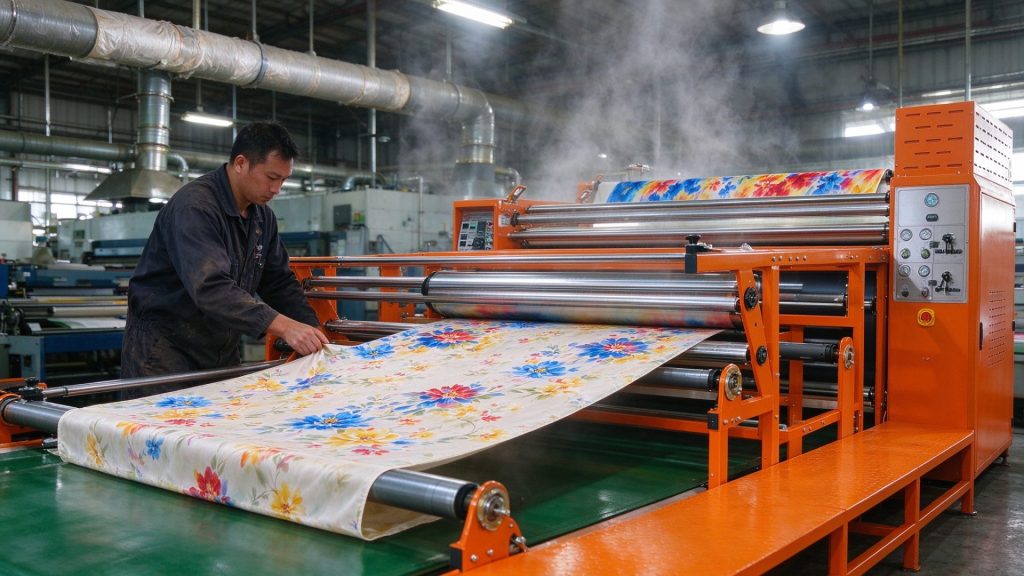
Climate is the primary factor in equipment selection for the Middle East
The impact of the Middle East’s high-temperature environment on heat Transfer Machines is concentrated on three components: heat transfer oil, transfer blankets, and the electrical control system.
Upper temperature limit of the heat transfer oil.The heat transfer oil in a roller Transfer Machine circulates within a closed system, with the oil temperature typically around 200°C under normal operating conditions. However, in Middle Eastern workshops where summer temperatures can exceed 45°C, the cooling efficiency of the heat transfer oil radiator drops significantly if the workshop lacks forced ventilation or air conditioning, causing the oil temperature to easily approach its upper limit.The equipment uses dye-sublimation-specific heat transfer oil with a temperature resistance of up to approximately 400°C. For the Middle Eastern market, it is recommended to verify two points: the temperature resistance rating of the heat transfer oil, and whether the cooling capacity of the equipment’s heat exchanger can handle operating conditions where ambient temperatures exceed 40°C.
Heat resistance and aging of the transfer blanket. The transfer blanket is a critical consumable for roller Transfer Machines, serving to press the fabric and transfer paper firmly against the surface of the roller.DuPont transfer blankets imported from the U.S. have a service life of approximately 1.5 to 2 years under normal operating conditions. However, in environments with sustained high temperatures, the rubber layer of the transfer blanket will age more rapidly. When selecting equipment, customers in the Middle East should pay close attention to the material and thickness of the transfer blanket, while also confirming whether the supplier has the capability to provide spare parts in the Middle East region.
Heat Dissipation for Electrical Components.The electrical control cabinet of a roller Transfer Machine contains heat-generating components such as variable frequency drives (VFDs), temperature control modules, and PLCs. Excessively high ambient temperatures can trigger overheating protection in VFDs and cause temperature control accuracy to drift. For equipment intended for the Middle East market, models equipped with electrical control cabinets featuring independent cooling fans or air conditioning should be selected instead of the standard version.
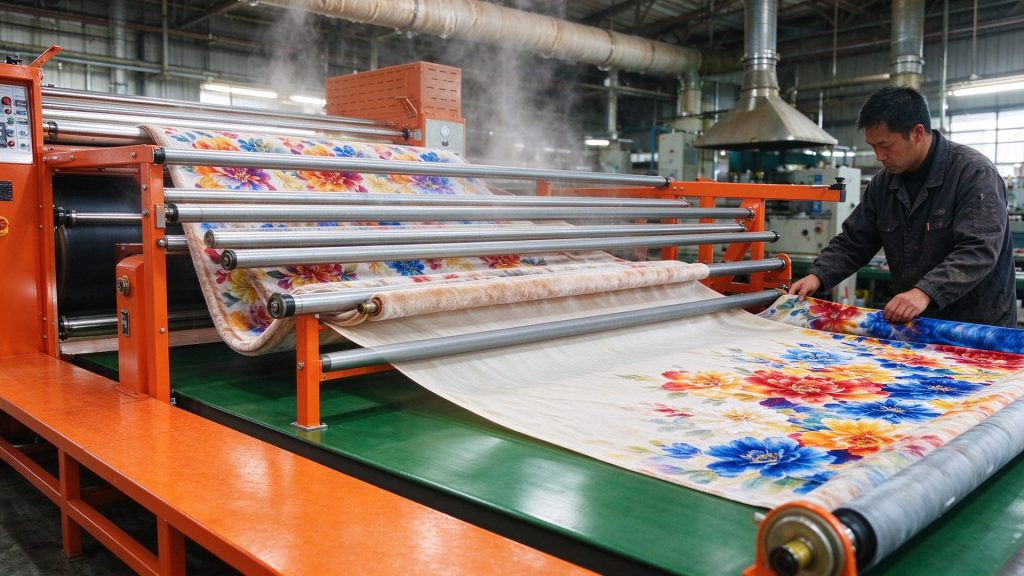
Power Conditions in Africa Determine Voltage Configuration
Power conditions in the African market are far more complex than those in the Middle East (for detailed instructions on customizing equipment voltage, see“Can the voltage of export equipment be customized to meet our country’s standards?”). Countries such as Nigeria, Kenya, and Tanzania commonly experience unstable grid voltages, with frequent power outages in some regions. The specific range of voltage fluctuations varies significantly from country to country; it is essential to measure the actual voltage in local workshops before purchasing.
Voltage Adaptation.The standard configuration of Drum Transfer Machines typically supports 220V single-phase or 380V three-phase power. Most African countries use three-phase 380V–415V, but the actual voltage may be lower. Equipment should be selected with a wide voltage input range or equipped with a voltage stabilizer.Some Chinese suppliers offer multi-voltage options (110V/220V/380V). When purchasing, African customers should clearly specify the actual local voltage range and request that the supplier confirm the equipment’s operational stability at the lower limit of that range.
Power Outage Response.Power outages occur frequently in some parts of Africa. In the event of a sudden power outage, if a drum Transfer Machine lacks an automatic blanket separation mechanism, the high-temperature blanket may stick to the drum and continue to be heated, causing the blanket to carbonize and become damaged.Models equipped with an “automatic blanket separation” function automatically separate the blanket from the drum during a power outage or shutdown; this feature should be a priority when selecting equipment for the African market.
Fabric Structure Determines Equipment Parameters
The composition of sublimation orders in the Middle East and Africa differs significantly from that of the European and American markets.
Middle East Market:Sportswear, team uniforms, and advertising banners are the primary applications for dye-sublimation. Investment in the sports industry in Gulf countries continues to increase, with significant growth in demand for sportswear fabrics in the UAE and Saudi Arabia. In addition, large outdoor advertising banners and billboards are also important application scenarios for dye-sublimation drum printers.Middle Eastern customers typically prefer fabrics with medium weight, with 100% polyester being the predominant choice.For equipment configuration, we recommend a drum diameter of 420 mm or greater and a fabric width of 1.7 to 1.9 meters; please refer to the specification range ofthe ZS-BA sublimation drum transfer machine.
African Market:Sublimation orders in Africa are concentrated in two areas: sportswear and casual wear produced by local garment factories, and advertising materials and home textiles. South Africa is Africa’s most mature sublimation market, with a comprehensive equipment distribution and technical support system. Nigeria, Kenya, and Egypt are fast-growing secondary markets.African customers are more price-sensitive regarding fabric costs, and blended fabrics are widely used. Before purchasing, confirm the colorfastness performance of the supplier’s sublimation process on blended fabrics—sublimation is suitable for synthetic fibers such as polyester and nylon, as well as their blended fabrics; it is not suitable for pure cotton, silk, or linen.
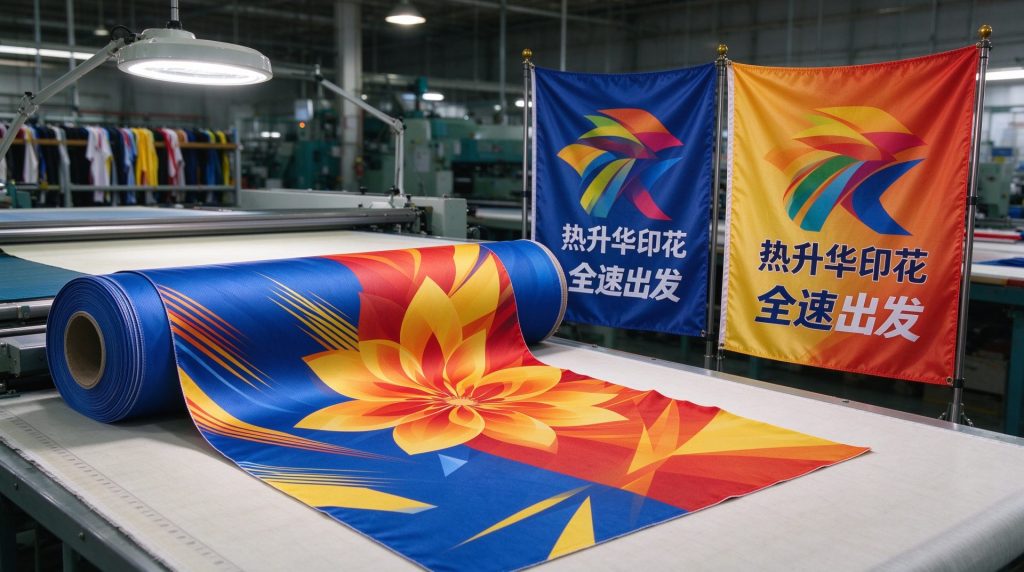
Certification and Import Requirements
Import certification requirements vary significantly across countries in the Middle East and Africa and must be confirmed in advance before purchasing.
Gulf Cooperation Council (GCC) Countries:Countries such as Saudi Arabia, the United Arab Emirates, and Kuwait require equipment to comply with GCC certification or local standards. Some equipment must provide SASO (Saudi Standards Organization) certification. Among Chinese suppliers, manufacturers with experience exporting to the Middle East and Africa are typically familiar with local certification requirements.
African Countries:South Africa requires equipment to comply with SABS standards.Nigeria has SONCAP certification requirements. Kenya requires PVOC certification. These certifications are typically handled by the importer during customs clearance at the port of destination, and equipment manufacturers must cooperate by providing the necessary technical documentation. **Specific requirements are subject to the latest guidelines from the importer and local customs clearance agents**; be sure to have the importer confirm the list before purchasing—do not rely on assumptions based on past experience.
General Value of CE Certification:Although CE certification is a European standard, in the Middle Eastern and African markets, equipment with CE certification is often viewed as a bonus that signifies quality assurance. Some Middle Eastern customers explicitly require CE certification.
After-Sales Support Is More Important Than Price
When sourcing sublimation Drum Transfer Machines internationally, after-sales support is the most commonly underestimated risk (for details on delivery and installation, see“Export Delivery of Printing Equipment”). Given the great physical distance to the Middle East and Africa, the time cost of waiting for spare parts and engineers is very high should the equipment malfunction.
Prioritize suppliers with local agents or service networks. Inthe South African market, several equipment distributors provide local technical support.In the Middle East, specifically the United Arab Emirates and Saudi Arabia, some Chinese equipment manufacturers have established service centers or spare parts warehouses. Before purchasing, you should ask the supplier directly: Do they have service engineers on-site? What is the lead time for commonly used spare parts (such as blankets, heat transfer oil, and heating tubes)?
Local Service and Trade Show Engagement.We have practical delivery experience in the Middle East and African markets and have long participated in industry trade shows in regions such as Egypt, allowing us to confirm operating conditions and configurations in person. If you plan to inspect equipment during a trade show, please send us your workshop conditions and order specifications in advance, and we will prepare a proposal based on those exact requirements.
Stability of Consumable Supply.The core consumables for roller Transfer Machines are blankets and heat transfer oil. The typical service life of a blanket is 1.5 to 2 years, though this may be shorter in the high-temperature environments of the Middle East. Heat transfer oil requires regular testing and replacement. If a supplier only sells equipment without guaranteeing a steady supply of consumables, your subsequent production operations will be at a disadvantage.
Frequently Asked Questions
Do high-temperature environments in the Middle East require specially configured roller Transfer Machines?
A completely specialized model is not required, but we recommend selecting a configuration with greater cooling capacity: synthetic heat transfer oil, independent cooling for the electrical control cabinet, and an automatic blanket separation function. If the workshop ambient temperature consistently exceeds 40°C, we recommend informing the supplier of the operating conditions when selecting equipment to confirm that the heat sink specifications are appropriate.
Voltage is unstable in some African countries. Can the equipment be used directly?
Voltage fluctuations in some African countries may exceed the equipment’s standard input range. Before purchasing, we recommend confirming the actual local voltage range and selecting a model with a wide voltage input range or equipping it with an industrial-grade voltage stabilizer. Additionally, prioritize equipment with an automatic blanket separation function to prevent blanket damage caused by power outages.
Are there suppliers of sublimation equipment with local service support in the South African market?
South Africa has a well-established distribution network for printing equipment, with multiple agents providing local technical support for sublimation equipment and consumables. Chinese equipment manufacturers typically provide services in South Africa through agents or distributors. Before purchasing, it is recommended to contact the supplier directly to confirm local service coverage in South Africa.
What roll-to-roll transfer machine widths are suitable for the Middle East and African markets?
For orders of athletic wear and advertising banners in the Middle East, we recommend a print width of 1.6 to 1.9 meters and a roller diameter of 420 mm or larger. The order structure in the African market is more diverse; for home textiles and apparel fabrics, we recommend starting with a print width of 1.2 to 1.6 meters, determined by the width of the primary fabric used in orders.
Summary:When selecting dye-sublimation roller transfer machines for the Middle East and African markets, the core principles are:climate determines configuration, electricity determines voltage, fabric determines parameters, and after-sales service determines the supplier. Middle Eastern customers prioritize heat dissipation in high-temperature environments and blanket lifespan, while African customers prioritize voltage compatibility and power outage protection.Confirm certification requirements in advance and include consumables supply in the contract. Common risks during the procurement process can be addressed by systematically reviewingthe “Common Pitfalls When Purchasing Printing Equipment from China.” Do not directly apply selection templates from Europe or Southeast Asia; first, clarify your workshop environment, power grid conditions, and primary fabric types, then have the supplier provide a tailored solution.
How We Approach This:Dongguan Zhishang Technology Co., Ltd. was founded in 1997, established a factory in Humen, Dongguan in 2003, and was officially registered in 2009. For nearly 30 years, we have specialized in the R&D and manufacturing of heat transfer equipment.If you are in the Middle East or African markets, please send us details regarding your workshop voltage, ambient temperature, primary fabric types, and order structure. We will first assess whether the configuration is feasible before providing a specific proposal.