































Why Is Tension Control Becoming Increasingly Critical in Continuous Printing on Synthetic Fiber Fabrics?
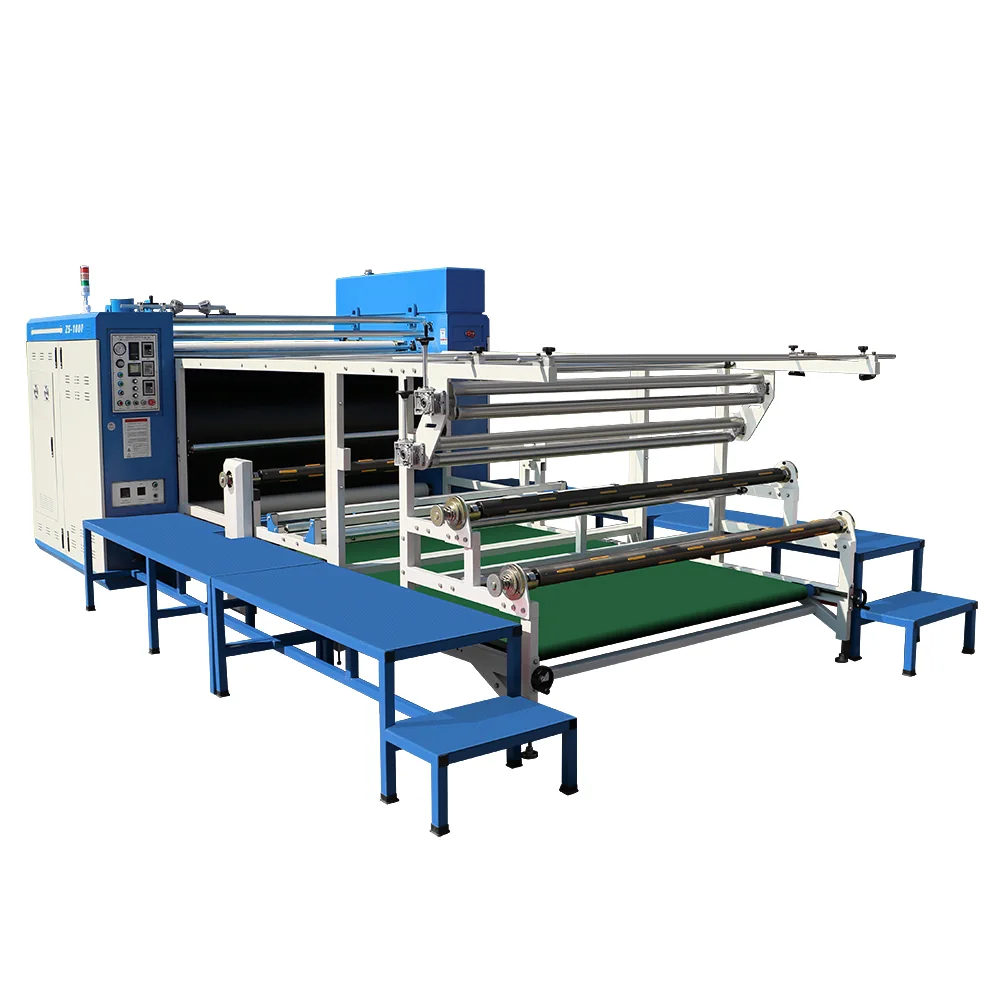
In the continuous sublimation transfer production of synthetic fiber fabrics, the actual transfer of the design takes only a split second; what truly determines the yield rate is whether the tension remains stable throughout the entire process, from unwinding to rewinding the fabric.Many issues classified as "process problems"—such as wrinkling, misalignment, color variations, and registration errors—can ultimately be traced back to fluctuations in tension.
What problems can uncontrolled tension cause?
- Fabric wrinkling: If the unwind tension is too high or the rewind is out of sync, wrinkles will form in the fabric before it enters the pressure rollers.
- Skewing and diagonal wrinkles: Slow web guiding response or uneven tension on both sides causes inconsistent force distribution across the fabric width.
- Color variation in transfer printing: Tension fluctuations alter the contact between the fabric and the roller, causing variations in the transfer rate.
- Poor winding: If take-up tension is improperly set, the finished roll will exhibit uneven tightness and uneven edges.
Unwinding, web guiding, and winding must be designed in coordination
Tension control is not an issue limited to a single component. Unwinding requires constant tension or tapered tension control; web guiding must remain sensitive under low tension conditions; and winding must remain synchronized with the line speed. If the parameters for these three stages are managed independently, mass production will result in a situation where “one roll is adjusted correctly, but the next roll is different.”
For knitted and stretch fabrics, it is recommended to set a wider tension control window and allow for manual fine-tuning to facilitate rapid adjustments for different fabric batches.
Different fabrics require different tension strategies
Lightweight, highly elastic fabrics are best suited for lower tension levels, combined with more sensitive web guidance; heavy fabrics, on the other hand, require sufficient tension to flatten the fabric surface and prevent fabric buildup before the pressure rollers.Before mass production, record tension parameters and correlate fabric specifications, line speeds, and tension values; this allows you to directly call up process recipes when switching orders.
Three Recommendations for On-Site Troubleshooting
- Start with a static inspection: Verify the parallelism of all rollers, pressure roller force, and fabric path to avoid mistaking mechanical issues for electrical ones.
- Next, perform segmented debugging: Verify the unwinding, transfer, and rewinding sections separately; once each segment is stable, integrate them into a coordinated operation.
- Finally, document the process: formalize the parameters for stable production into a process sheet to reduce reliance on individual experience.
If you encounter stability or yield issues related to tension during continuous printing production, please contact Zhishang Technology. We will provide targeted adjustment recommendations based on your specific fabric and machine model.