

































Why Is Tension Control Becoming Increasingly Critical in the Continuous Printing of Synthetic Fiber Fabrics?
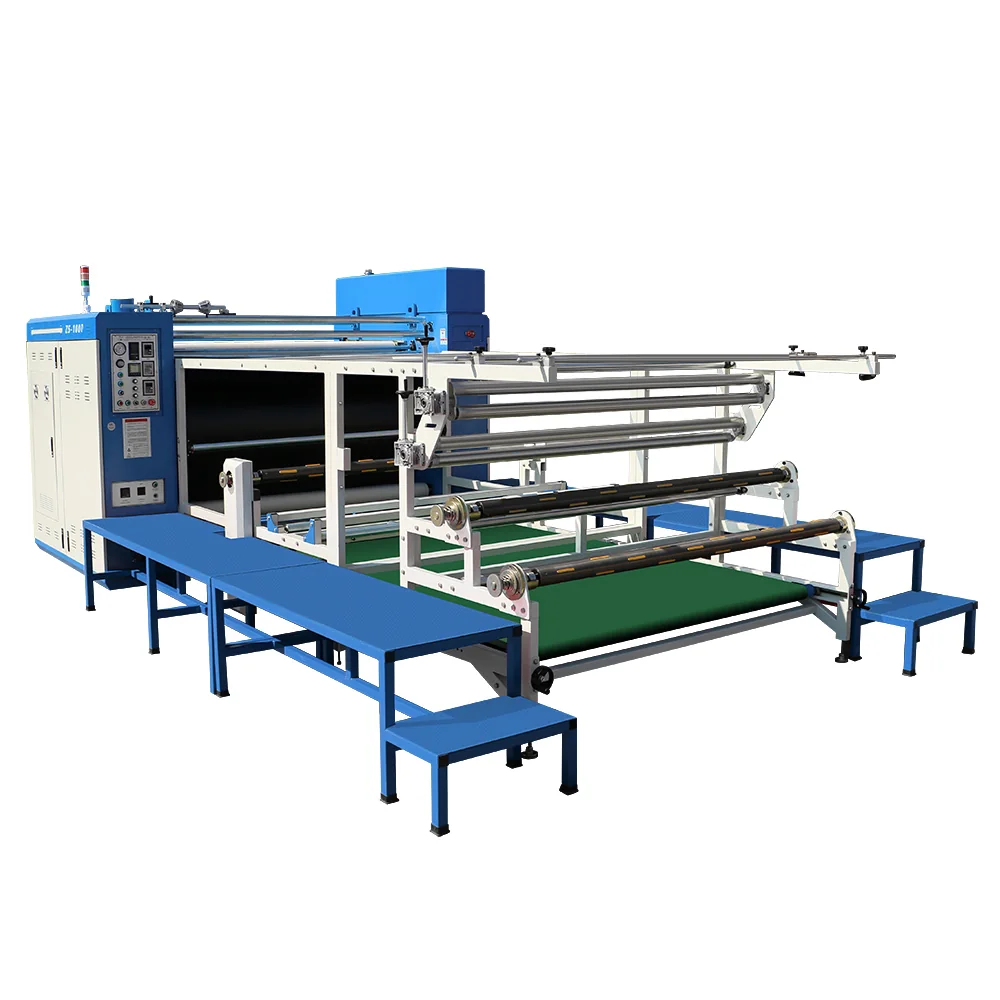
In the continuous thermal sublimation transfer of synthetic fiber fabrics, pattern transfer occurs only in the brief contact zone between the roller and the fabric; however, the quality of the finished product depends on the entire fabric path from unwinding to rewinding.Pilling, misalignment, color discrepancies, pattern distortion, and uneven winding are often treated as isolated “process issues,” but in reality, they require simultaneous inspection of machine condition, tension settings, and speed stability.
I. What Problems Are Exacerbated by Tension Fluctuations?
| On-Site Observations | Common Directions | Priority Checks |
|---|---|---|
| Longitudinal or diagonal wrinkles appear before fabric entry | Excessive unwind tension, uneven fabric edges, or non-parallel feed rollers | Unwinding tension, roll end alignment, guide roller parallelism, and fabric spread during feeding |
| Fabric edge consistently drifts to one side | Insufficient web guidance response, uneven tension on both sides, or inherent skew in the web | Position of the web guidance sensor, condition of the fabric edges, and pressure on both sides |
| Color inconsistencies within the same batch of fabric | Changes in tension alter the fabric’s contact condition, or simultaneous fluctuations in temperature and speed | Tension in the transfer zone, roller temperature, and actual linear speed |
| Pattern stretching or variations in repeat spacing | Unsynchronized unwinding and rewinding, causing the material to undergo additional stretching in the transfer zone | Synchronization of unwinding and rewinding, speed transition zones, and the state of elastic fabrics |
| Uneven tension and uneven edges on the finished roll | Excessive or insufficient take-up tension, or insufficient compensation for changes in roll diameter | Winding taper, dual-roll winding conditions, and variations in roll diameter |
II. Unwinding, web guiding, and rewinding must work in coordination
Unwinding ensures the web is fed smoothly; web guiding keeps the fabric edges in the correct position; and rewinding maintains a stable speed even as the roll diameter changes. If these three processes are adjusted independently, the common result is that “one roll is adjusted properly, but the next roll is off again.”During continuous production, first verify that the fabric surface is flat at low speed, then gradually increase to the target speed while observing tension changes as the fabric enters and exits the transfer zone.
Taking the ZS-BD 2200 mm digital roller transfer machine as an example, the equipment specifications list features such as automatic feed alignment, automatic web guiding, automatic flattening, electric-assisted loading and unloading, exit cooling, fabric spreading, and dual-roller fabric take-up.This combination of mechanisms reduces the need for manual intervention, but parameters still need to be verified based on the fabric’s weight, elasticity, roll diameter, and target speed. Parameters from other fabrics or different machines cannot be directly applied.
III. Troubleshoot Mechanical Issues First, Then Adjust Control Parameters
When the fabric drifts off-track, do not immediately attempt to “hold down” the fabric edge by increasing tension. Excessive tension may temporarily mask the problem but increases the risk of stretching, curling, and fabric breaks. It is recommended to troubleshoot in the following order:
- Static Inspection:Verify the parallelism and cleanliness of the guide rollers, pressure rollers, winding and unwinding shafts, and the web guiding mechanism.
- No-load fabric run:Run only transfer paper or scrap fabric to observe whether the fabric edge and speed remain stable.
- Low-Speed Fabric Run:Use the customer’s actual fabric at low speed to verify fabric feeding, unfolding, web guiding, and foil adhesion.
- Gradual Speed Increase:Record the fabric condition at low, medium, and target speeds; do not jump directly to the maximum speed.
- Curing process:Once batch consistency is achieved, record the fabric type, width, weight, speed, winding condition, and adjustment notes.
IV. Different Fabrics Require Different Tension Strategies
Lightweight, highly elastic fabrics are more sensitive to tension; prioritize ensuring smooth fabric feed at low tension and allow sufficient response time for the web guidance system.Heavy, thick fabrics require sufficient tension to fully unfold the fabric, but fabric piling before the pressure rollers must be avoided. The coefficient of friction, elasticity, and roll condition of fabrics vary by batch; therefore, process records should not merely note the “tension setting” but should also include fabric information, roll diameter, and equipment status.
V. What Should On-Site Records Include?
- Fabric composition, weight per square meter, width, elasticity, and surface finish
- Condition of the roll ends, roll diameter, and roll change location
- Unwinding settings, web guidance status, winding taper, and air pressure parameters
- Transfer temperature, linear speed, and speed transition method
- Pattern stretching, fabric edge offset, wrinkle locations, and winding results
Tension control is not achieved by a single button but is the result of coordinated operations across the entire continuous transfer production line. When selecting a model, pleaserefer toboth the ZS-BA Garment Roller Transfer Machine specifications andthe transfer suitability guides for different fabrics. Before commencing full-scale production, conduct continuous material-feed validation using the customer’s actual fabric, specific design patterns, and target speed.