

































How Many Meters Can a Rotary Sublimation Heat Press Produce per Day? A Guide to Calculating Output Based on Working Width, Speed, Downtime and Waste
“How many meters can this machine print in a day?” is the most common question when purchasing a dye-sublimation roller Transfer Machine—and it’s also the one most easily misled by a single speed figure. To obtain results that can be used for production scheduling, you must factor in the equipment’s stable operating speed, daily effective operating time, finished product yield rate, and order changeover structure.
This article follows the sequence of “first presenting the formula, then providing a calculation example, and finally explaining the method for on-site data collection.” The equipment and speed parameters in this article are taken from the corresponding product pages; downtime, yield rate, and scenario-based output are all calculation assumptions and do not represent actual average values measured at any customer’s factory.
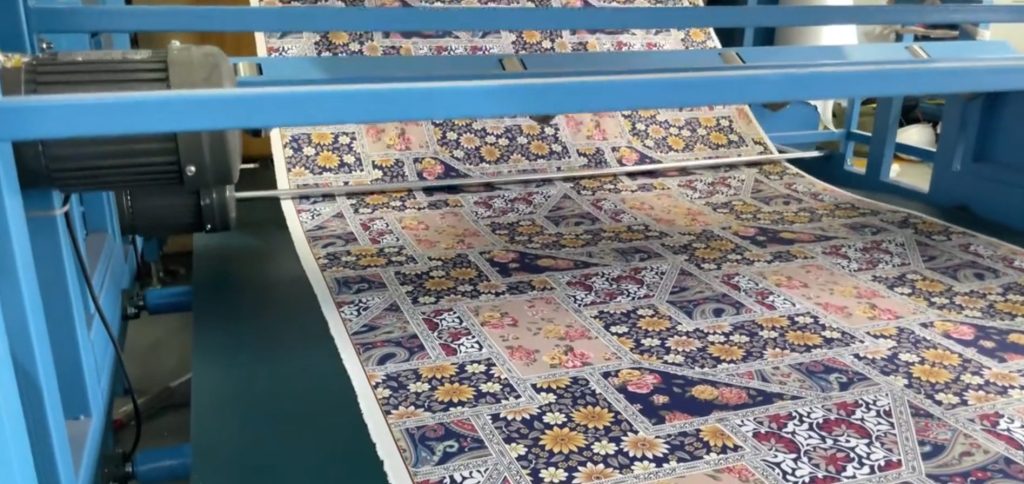
Figure 1: On-site recording of continuous fabric output from a ZS-BD machine with a 1000 mm drum and a 1900 mm effective width; on-site speeds can reach over 1000 m/h.
I. First, let’s establish a common understanding: nominal speed is not the same as daily production capacity
Equipment specification tables typically provide reference speeds based on standard configurations, while actual effective production capacity is calculated as “meters of qualified finished product ÷ total shift time.” If the question refers to linear meters, the width should not be multiplied into the result again;if estimating processed area, multiply the number of qualified meters by the effective web width. Many production scheduling disputes arise from conflating linear meters, square meters, and peak equipment speed into a single figure.
II. First, clarify the equipment’s actual standard specifications
Speed, web width, roller diameter, and power vary significantly across different models; these parameters should not be combined into a single, hard-to-read horizontal table. The following lists these specifications by machine model. All speeds are provided for reference only; actual stable speeds should be determined based on fabric test runs and on-site measurements.
- Small-sized roller machine: Effective heating area: 200 × 700 mm;Small thermal oil drum; reference speed up to 40 m/h; total power 6 kW.
- ZS-BA Apparel Model:Available effective widths: 1700 mm or 1900 mm;drum diameter 270–800 mm; reference speed 90–620 m/h; power configurations 13 / 15 / 28 / 45 / 68 kW.
- ZS-BD (actual machine shown in Figure 1)(1000 × 1900 configuration):Effective width: 1900 mm; roller diameter: 1000 mm;Equipment speed range: 120–1,200 m/h; on-site continuous fabric output record exceeds 1,000 m/h.
- ZS-BD Industrial Edition:Effective width: 2,200 mm;Optional drum diameters: 1,000 mm, 1,200 mm, or 1,500 mm; Reference speed: 880–2,000 m/h; Power configurations: 96 / 120 / 146 kW.
The above are standard equipment specifications; these production speeds may not be sustainable for all fabric types. Fabric composition, weight, pattern coverage, transfer paper, ink, temperature, and post-processing conditions can all affect stable operating speeds. In particular, for high-density fabrics or large-area dark-colored patterns, a sample run must be conducted first to determine the operating parameters that ensure stable production.
Figure 1: On-site machine operation record:In the company’s on-site continuous fabric output records for the machine shown in Figure 1, the ZS-BD configuration—featuring a 1000 mm drum and a 1900 mm effective width—has achieved a speed of over 1000 m/h.The figures recorded here represent on-site hourly speeds and do not indicate that all fabrics and orders can maintain the same speed throughout the entire day; actual production is still influenced by factors such as fabric type, weight per square meter, pattern coverage, temperature, transfer paper, and the synchronization of unwinding and rewinding.
III. The Only Practical Formula for Daily Production Capacity
Daily Deliverable Capacity (meters) = Steady Operating Speed (meters/minute) × Daily Effective Operating Minutes × Finished Product Yield Rate
Here, the number of effective operating minutes must be calculated by subtracting warm-up, roll changes, cleaning, machine adjustments, and unplanned downtime from the total working hours. The finished product yield rate should be based on actual records for the same batch of fabric, rather than simply adopting figures from others.
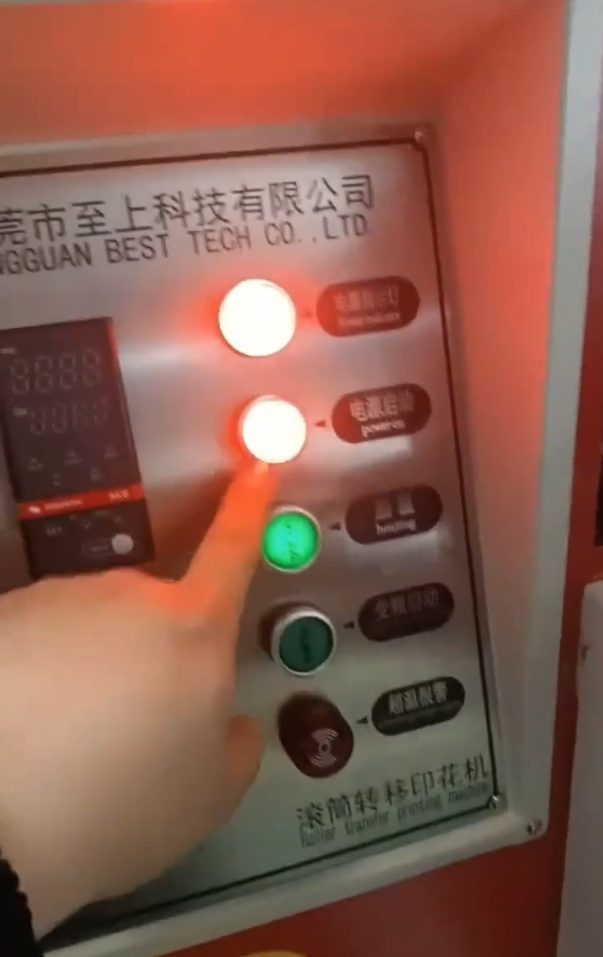
Figure 2: An operator views and adjusts the equipment’s operating status on the control panel.
IV. Demonstrating the Calculation Using a Specific Assumption
The following example is provided solely to illustrate the formula. Assume a ZS-BA configuration with a 600 mm drum, an actual steady-state speed of 4.5 meters per minute (equivalent to 270 m/h, within the standard reference range for this model), an 8-hour single shift, and the following example times:
- Total shift duration: 480 minutes
- Warm-up time: 45 minutes, based on information from the ZS-BA product page indicating a warm-up time of approximately 45 minutes to reach 200°C;For other models, actual equipment specifications apply
- Two batch changes: Estimated at 20 minutes each, totaling 40 minutes
- Cleaning, loading, and inspection: 25 minutes
- Troubleshooting and brief shutdowns: 30 minutes
- Example finished product yield rate: 90%
Effective operating time = 480 – 45 – 40 – 25 – 30 = 340 minutes.
Example daily deliverable production capacity = 4.5 × 340 × 90% = 1,377 meters.
The figure of 1,377 meters is the calculated result based on this set of assumptions; it is not the standard daily output for this machine model. If the same equipment operates only half a shift, experiences more order changes, faces a significant shortage of orders, or operates at a lower actual steady-state speed, the result will decrease accordingly; conversely, if a higher steady-state speed is achieved and downtime is reduced, the result will increase.You cannot use both 4.5 meters per minute and 340 minutes of effective time while also expressing this result as 300–600 meters.
V. Calculating Equipment Speed Based on Target Output
If your goal is not to estimate equipment output but rather you know exactly how many meters must be delivered each day, you can calculate the required steady-state speed in reverse:
Required speed (meters/minute) = Target daily output ÷ (Effective operating minutes × Pass rate)
For example, if the target is 1,000 meters per day, with 340 minutes of effective operation and a sample yield rate of 90%, the required steady-state speed is approximately 3.27 meters per minute, or about 196 meters per hour. When selecting equipment, you should verify that the machine can consistently maintain this speed on actual fabric, rather than relying solely on the maximum value listed on the nameplate.
VI. Factors That Reduce Actual Production Capacity
1. Job Changes and Temperature Stabilization
After changing the fabric width, type, or pattern, it is necessary to rethread the fabric, adjust tension, and verify the temperature. The more frequent the job changes, the higher the proportion of time spent on preheating and test runs. Grouping orders with the same pattern and fabric type in production scheduling can reduce unnecessary downtime.
2. Tension, Web Guidance, and Fabric Condition
Web deviation, wrinkles, and uneven winding can lead to reduced speed, rework, or the scrapping of entire sections of fabric.Features listed in equipment specifications—such as automatic feed alignment, automatic web guidance, synchronized winding, and dual-roll fabric take-up—are merely hardware capabilities; actual performance still depends on the fabric condition and parameters. For additional tension troubleshooting methods, refer to theGuide to Tension Control for Continuous Printing of Synthetic Fiber Fabrics.
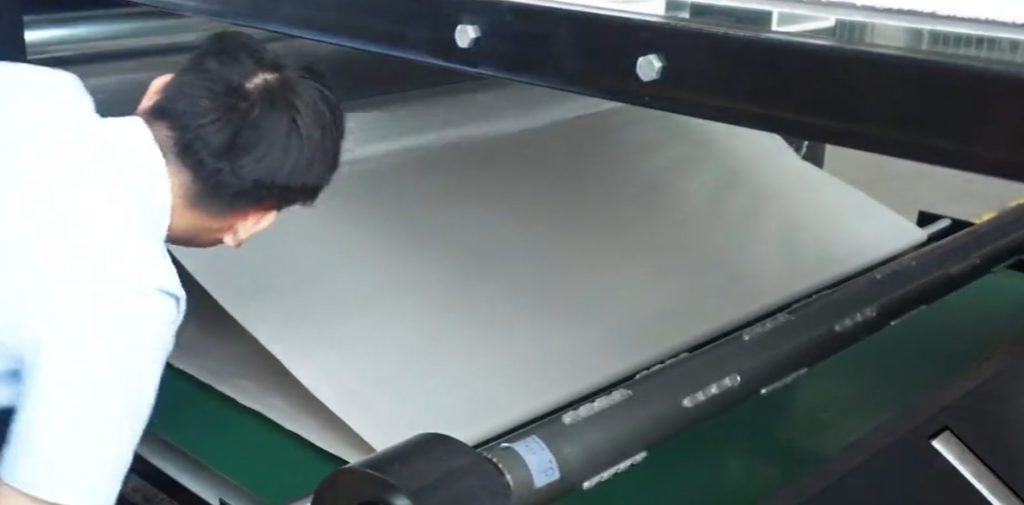
Figure 3: The operator checks the fabric feed condition before deciding whether to adjust the fabric feed or tension parameters.
3. Mismatch Between Upstream Printing and Downstream Equipment
The speed of the roller machine must be matched to the printer’s paper output speed, the width of the transfer paper, the winding and unwinding capacity, and subsequent processing steps. When upstream paper supply is insufficient, the roller machine must slow down and wait.A wider machine is not necessarily better: using an excessively wide machine for narrow-width orders increases idle running time and trim waste.
4. Order Volume vs. Effective Demand
Equipment capacity does not equal order demand.When orders are insufficient, even if the machine can run at high speed within its parameter range, there won’t be enough meters of material to meet the daily production target. Before purchasing, you should compile a single table that includes the estimated number of order days, job change frequency, and target production capacity.
VII. Record Your Actual Production Capacity Over Three to Five Days
The initial assessment should not rely on guesswork. It is recommended to keep continuous records for at least three days, logging the following daily: machine startup time, start of feeding time, steady operating speed, roll and job change times, reasons for shutdown, total meters processed, rework meters, and qualified-product meters. Finally, calculate the actual effective time and qualified-product rate using the formula.
If there are no trial production records, you can only use conservative assumptions for budgeting; once equipment or customer data becomes available, you must replace these assumptions with actual records. Regarding the transferability of different fabrics, please refer to theGuide to Sublimation Fabric Compatibility;For information on energy consumption and equipment stability, please refer to theGuide to Stable Mass Production and Energy Conservation.
Frequently Asked Questions
Can a 600 mm roller really process 600 meters in a day?
This cannot be answered based solely on the roller diameter. The 600-meter figure may result from low order volumes, short shifts, or frequent downtime, or it could stem from a lower, stable operating speed.When calculated using steady speed, effective minutes, and actual yield rate, 600 meters is merely the result of a specific scenario—not a standard for the equipment.
Does a wider web width necessarily mean more meters?
If comparing linear meters, wide-width and narrow-width machines cover the same number of meters per day at the same speed and runtime; however, wide-width machines cover a larger area per meter. If the order itself is narrow, using an excessively wide machine will not automatically increase effective sales volume; instead, it will increase idle running, energy consumption, and trim waste.
Should the maximum speed be used in calculations?
The maximum speed should not be applied directly to production scheduling. Instead, use the speed at which stable, continuous production can be maintained with the actual fabric, pattern, and customer acceptance criteria, and verify this with at least one continuous run test.
Since all the numbers are assumptions, does this article still have any reference value?
Yes. The article provides verifiable formulas, fields that need to be recorded, and methods for reverse calculation. As long as it is clearly labeled which numbers come from product parameters and which from calculation assumptions, procurement personnel can substitute their own data for the examples to obtain accurate results.
Summary: The maximum speed listed on the equipment nameplate only indicates the capacity limit and cannot be directly used as daily production capacity. First, confirm the stable operating speed; then, record the effective operating time; and finally, use the actual yield rate to calculate the number of meters of finished product. Only figures calculated in this way are suitable for use in quotations, production scheduling, and equipment selection.Specific equipment configurations can be further verified inZS-BD Industrial Roller Transfer Machine, ZS-BA Apparel Version, andEquipment Payback Calculation.