

































Four Process Control Points in the Heat Transfer Printing of Woven and Elastic Bands
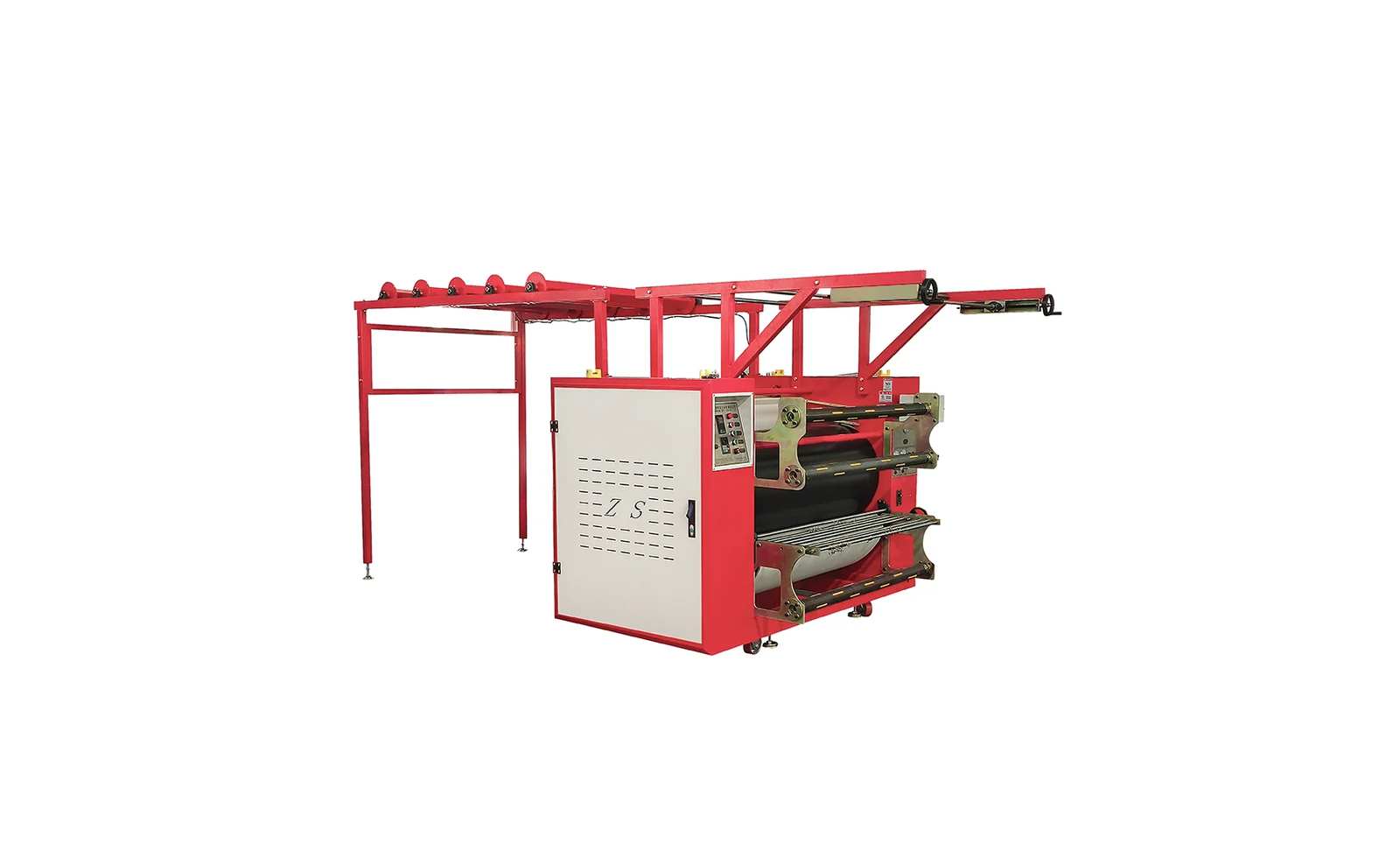
Continuous heat transfer printing on narrow, elastic materials—such as webbing, elastic bands, and zipper tapes—involves a different process approach than wide-width fabric printing: the materials are narrow, tension is low, and job changes are frequent, so any fluctuation in any stage of the process is magnified. The following four process control points are the areas most prone to problems during mass production and the ones most worth addressing in the design phase.
I. Temperature and Pressure Matching
Narrow-width woven ribbons are exposed to heat for only a short time under the pressure rollers, requiring a more precise match between temperature and pressure. Insufficient temperature can result in poor transfer adhesion and mottled patterns; excessive pressure, on the other hand, can flatten the structure of the elastic material, affecting its hand feel and resilience.It is recommended to conduct temperature-speed gradient test runs for different web specifications prior to mass production to determine the process window.
II. Stable Tension and Speed Control
Woven tape materials are highly sensitive to changes in tension; unstable feed tension directly results in pattern stretching and uneven repeat spacing. Servo-driven constant-tension feeding, combined with smooth linear speed control, is the foundation for ensuring consistency in continuous production. Transitions in speed during job changes must also be handled smoothly.
III. Pattern Registration and Color Registration
Continuous woven ribbons typically feature repeating patterns, and registration accuracy determines the visual quality of the finished product. The equipment must provide stable ribbon feeding accuracy and pattern registration capabilities, while maintaining pattern continuity during roll changes and ribbon splicing. For multi-color repeating patterns, it is recommended to include registration marks and process parameters in the process sheet management.
IV. Finishing and Color Fastness Testing
Post-processing steps such as washing and setting after sublimation printing affect the final colorfastness. It is recommended to conduct washing, rubbing, and tensile tests on a batch-by-batch basis, recording the test results alongside the sublimation parameters to create traceable process data. This allows for rapid identification of whether issues stem from the sublimation printing stage or the post-processing stage.
Zhishang Technology’s sublimation ribbon printing machines are designed for the continuous production of narrow-width elastic materials and support the adjustment of tension and speed settings according to specifications. Please feel free to contact us for sample verification or production line evaluation.