

































Equipment Shipment Case Study: Hydraulic Heat Transfer Press from Guangzhou Port and Multiple Machines for Mexico
On Friday, October 30, 2026, we recorded the shipment of two batches of equipment: loading was completed for the shipment bound for the Port of Guangzhou, consisting of 6 units of 40×60 hydraulic heat transfer machines; container loading was completed for the shipment bound for Mexico, including 3 sublimation roller transfer machines, 1 DF-1827 fabric laser cutter, and 1 fabric feeder.
Note: This article does not disclose customer names, transaction amounts, or end-user production data. The following records only the confirmed quantities, specifications, packaging, and loading/containerization information for this shipment; installation and commissioning results that are incomplete or unconfirmed are not reported as completed.
I. Bound for Guangzhou Port: 6 units of 40×60 hydraulic heat transfer machines, packed into 3 wooden crates
The order bound for Guangzhou Port consists of 6 hydraulic heat transfer machines of the same specification (40×60), packed into 3 wooden crates. On-site photos show that one wooden crate has already been loaded into the truck, while the other two are being loaded in sequence.
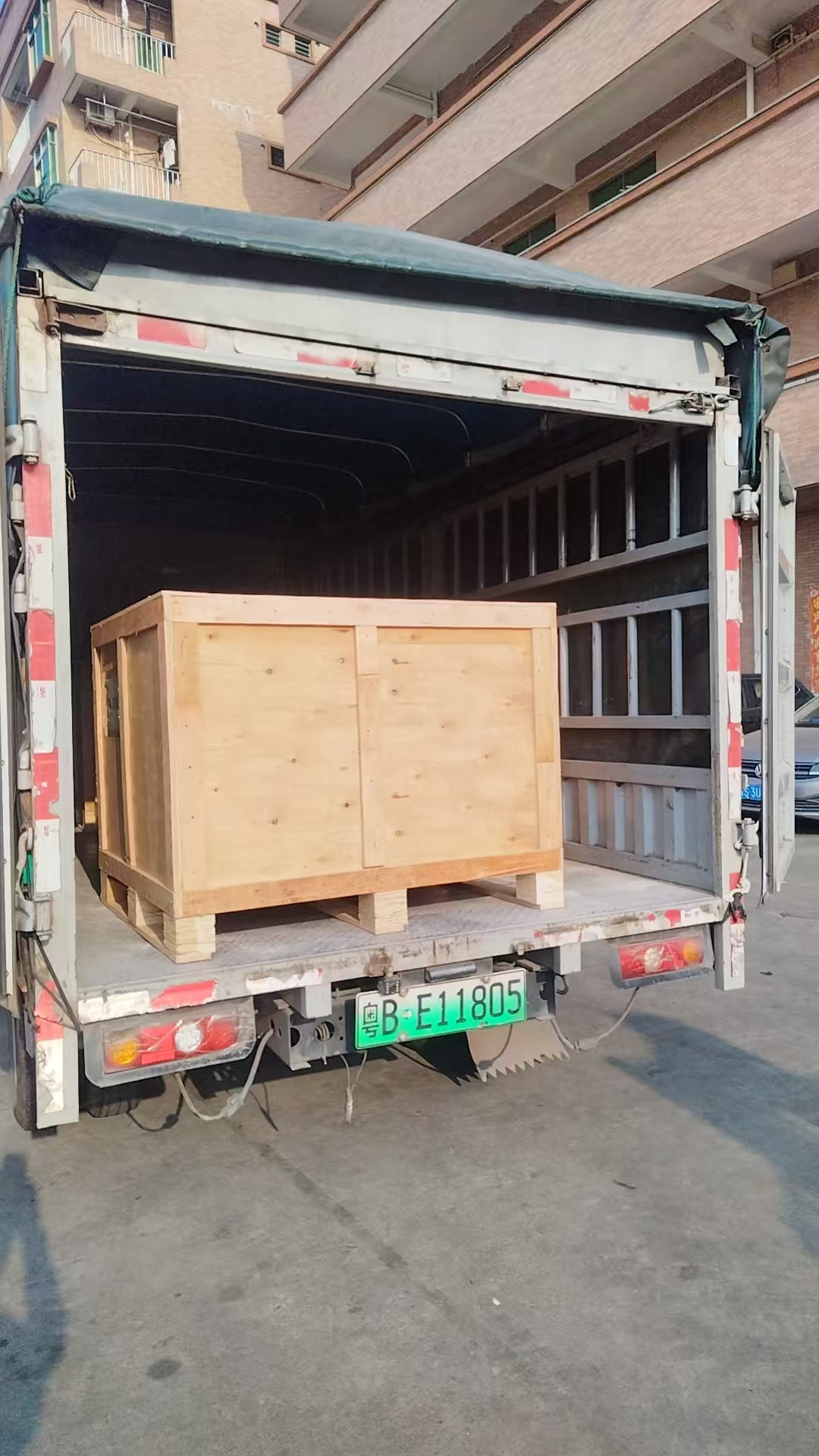
Loading site for the shipment bound for Guangzhou Port: The photo first shows one of the wooden crates; the entire batch of 6 units is divided into 3 wooden crates, with the actual quantity subject to the packing list.
Equipment of the same specifications is grouped into separate crates to facilitate arrangement by crate number during loading, quantity verification, and subsequent inventory checks. Space is left at the bottom of the crates for forklift operations. After loading, it is necessary to confirm that the crates are not tilted, that they are stable relative to one another, and that they will not slide during transport.
This customer purchased this batch of 40×60 hydraulic heat press machines, which are primarily used for printing on garments such as short-sleeve shirts, to fulfill small-batch, multi-style custom orders.
II. Mexico Destination: Sublimation Drum Transfer Machines, laser cutters, and fabric feeders are shipped together in a single consignment
The order for Mexico consists of a single combined equipment shipment, specifically including:
- 3 dye-sublimation Drum Transfer Machines:1 unit each in the following configurations: 200×1700, 420×1700, and 600×1700;
- 1 DF-1827 fabric laser cutter;
- 1 fabric feeder.
The client primarily places bulk orders for fabric printing, with products including quilts and other large-format fabrics. Three roller Transfer Machines—measuring 200×1700, 420×1700, and 600×1700—were configured according to the customer’s production capacity requirements. The laser cutter is used to trim fabric after printing, addressing the issues of inconsistent precision and low efficiency associated with manual cutting; the fabric feeder supplies material to the laser cutter, bridging the gap between the transfer and cutting processes.
In the photos of the container loading, wooden crates labeled “Fabric Feeder” and “Laser Cutter DF-1827 (DF18271034)” are clearly visible.The three roller Transfer Machines were loaded into the container according to the same batch loading plan; the photos primarily document the packaging and markings visible from the container door and do not imply that equipment not shown individually in the frame has been included in the photos one by one.
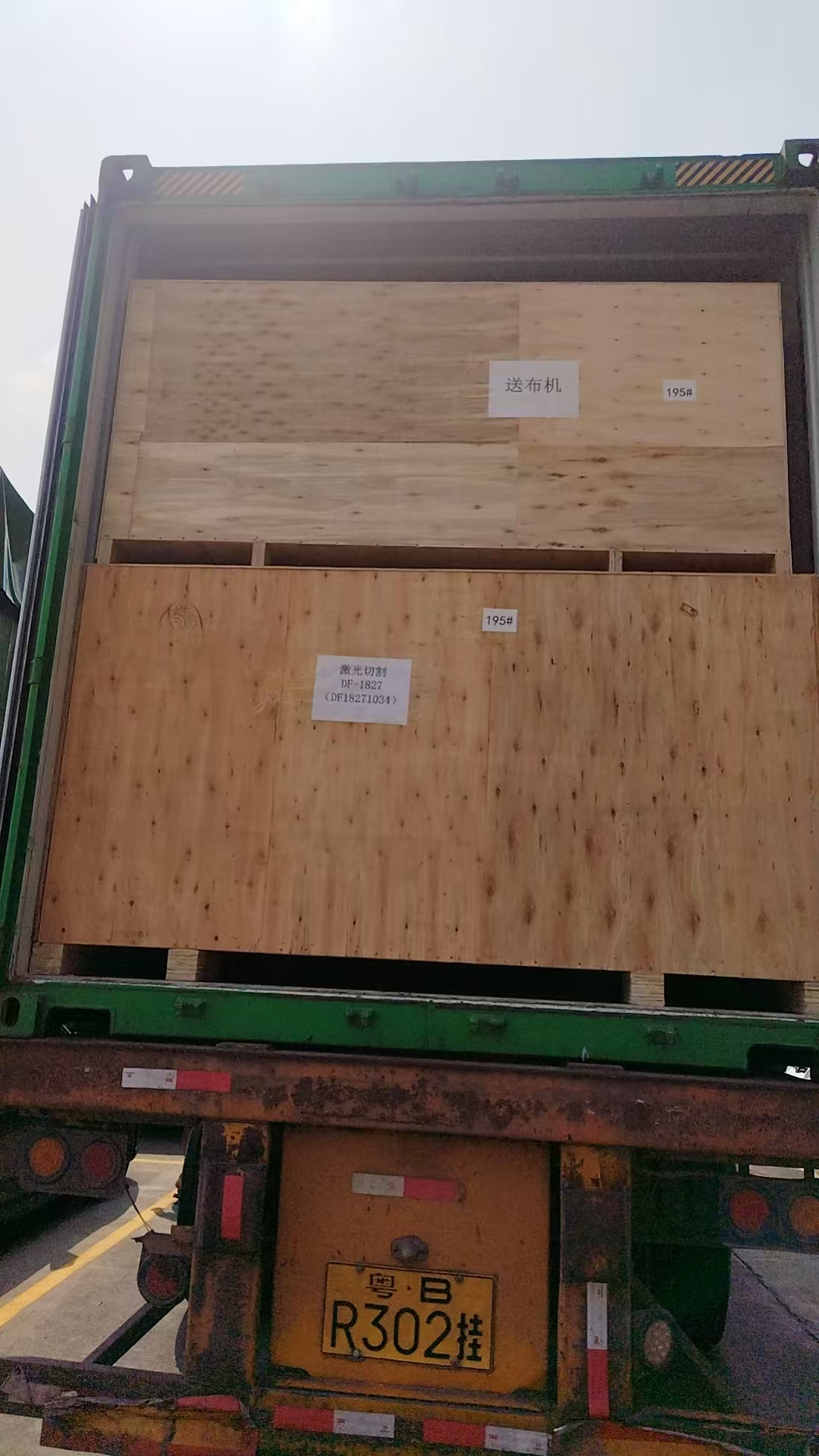
Container loading site for shipments to Mexico: Wooden crates for the fabric feeder and the DF-1827 fabric laser cutter are visible; the equipment is secured according to crate numbers and the packing plan.
III. Packaging and Marking for Multi-Model Orders
The packaging priorities for these two shipments differ. For the Guangzhou Port shipment, which consists of 6 hydraulic heat transfer machines of the same specification, the priority is to accurately distribute the total quantity across 3 wooden crates and ensure that the crate numbers, quantities, and packing list match.The shipment bound for Mexico, on the other hand, consists of a mixed load of multiple equipment models. Since the equipment varies in size, weight, and handling requirements, the packaging and markings must be tailored to each individual unit.
Photos of the container loading show that the wooden crates are arranged in a combined configuration inside the container, with the equipment names and serial numbers labeled on the crates.For mixed-equipment orders like this, the markings must at least allow for quick identification of equipment categories, container numbers, and corresponding manifests, thereby reducing the need to repeatedly open containers for verification upon arrival at the port.
IV. What Needs to Be Verified During Truck and Container Loading
- Equipment Models and Quantities:Verify 6 units of 40×60 hydraulic heat press machines, 3 units of sublimation roller transfer machines, 1 unit of DF-1827 fabric laser cutter, and 1 unit of fabric feeder;
- Number of Crates and Crate Numbers:Confirm a total of 3 wooden crates bound for Guangzhou Port; for shipments to Mexico, verify each crate individually by equipment;
- Markings and Packing List:Ensure consistency between equipment names, specifications, box numbers, and quantities;
- Loading and Securing:Inspect the bottoms of the wooden crates, the spacing between crates, and the lashing to prevent shifting during transit;
- Documentation and Accessories:Verify item by item against the checklist to ensure that all included accessories, operating manuals, and corresponding equipment lists are complete.
The customer is a long-standing client who has previously purchased and used similar equipment and is familiar with the installation and operation procedures. No new practical testing projects were scheduled for this order, and there is no customer feedback, installation photos, or production data available for public release.
V. Scope of This Record
This document records the facts regarding the completion of equipment loading onto trucks, container loading, and preparation for shipment. The customer name, transaction amount, arrival time at port, installation and commissioning results, and mass production data are not disclosed in this document and will not be supplemented with speculative information.
If information regarding installation, trial operation, and production launch is subsequently confirmed by the customer, a separate follow-up record may be added; it should not be prematurely included as final production results during the shipment stage.
VI. Related Equipment and Case Studies
For reference, the equipment involved in this project includes:heat transfer machines,sublimation drum transfer machines; fabric laser cutters; andfabric inspection and feeding equipment.For more shipment records, seethis shipment log for dye-sublimation roller transfer machines and matching consumables.
If you are placing a combined order for hydraulic heat press machines, sublimation roller transfer machines, fabric laser cutters, and fabric feeders, please provide us with the fabric types, widths, target production capacity, destination port, and packaging requirements. We will verify the equipment and shipping plan based on the actual configuration.