

































Automatic Edge-alignment Multifunction Fabric Inspection Machine
The Automatic Edge-alignment Multifunction Fabric Inspection Machine uses an infrared automatic edge detector for automatic edge alignment. It can directly wind plain-weave fabrics with a fabric rolling width of 1900 mm and overall dimensions of 2400 × 710 × 965 mm. with a motor power of 2.2 kW. It supports an optional overhead edge-suction device and is suitable for winding and organizing heavy and irregularly packaged bolts of fabric.
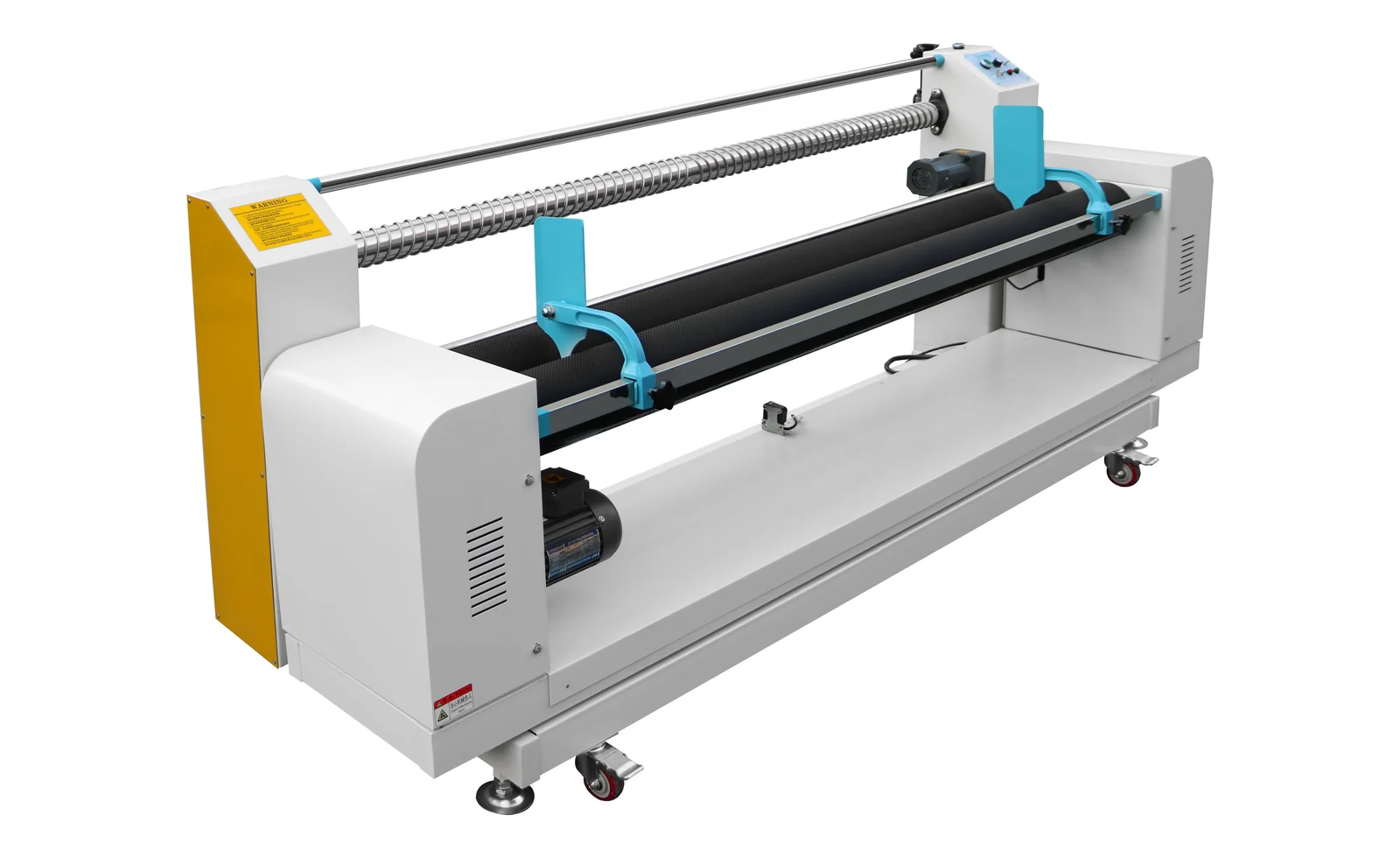 Fabric Inspection Machine
Designing Equipment to Meet Actual Production Goals
The Automatic Edge-alignment Multifunction Fabric Inspection Machine is used for fabric spreading, unrolling, and rewinding fabric rolls during the fabric winding, unwinding, and fabric inspection processes. Equipped with a high-power gear motor and an infrared automatic edge detector, it can directly wind plain-weave fabrics and perform automatic edge alignment during operation.The machine has a fabric rolling width of 1900 mm and overall dimensions of 2400 × 710 × 965 mm,with a motor power of 2.2 kW. For heavier or irregularly packed fabric rolls, an optional overhead edge-guiding device is available, ensuring smoother fabric feeding during winding and more stable machine operation.
Equipment Advantages
- Infrared Automatic Edge Detection and Automatic Edge Alignment:The machine uses an infrared automatic edge detector to control automatic edge alignment, allowing real-time adjustment of fabric misalignment during the winding process. This reduces the need for frequent manual adjustments to the fabric edge and helps maintain neat roll ends.
- Direct Winding of Plain-Weave Fabrics:Plain-weave fabrics can be wound directly without additional preparation steps, making it suitable for production scenarios where rolls need to be rewound and organized before or after fabric inspection.
- High-Power Geared Motor:Driven by a high-power geared motor, the machine delivers ample torque and smooth operation, making it suitable for continuous winding of large-diameter and heavy fabric bolts.
- Optional elevated fabric-edge-gripping device:For heavy or irregularly bundled rolls of fabric, an optional elevated fabric-edge-gripping device can be installed to improve fabric feed conditions and ensure smoother machine operation.
- 1900 mm Fabric Rolling Width:The standard fabric rolling width is 1900 mm, covering the winding requirements for most apparel fabrics, home textile fabrics, and conventional fabric rolls.
- Compact design facilitates workshop layout:With external dimensions of 2400 × 710 × 965 mm, the machine has a small footprint, making it easy to integrate with Fabric Inspection Machines, fabric spreading machines, and cutting processes.
Applicable Industries and Use Cases
This machine is suitable for fabric inspection workshops in textile mills, printing and dyeing plants, garment factories, home textile factories, and fabric warehouses. It can be used for rolling yard-width fabric, rolling plain-weave fabrics, re-rolling fabric after inspection, as well as fabric spreading and winding processes.For heavy or irregularly bundled fabric rolls, the machine can be equipped with an optional overhead edge-suction device, making it suitable for winding and finishing greige, printed, dyed, and standard home textile fabrics. Before actual use, the equipment configuration should be confirmed based on the fabric roll width, weight, bundling method, and the direction of fabric entry and exit in the workshop.
Technical Specifications
| fabric rolling width | Motor Power | Dimensions | Web Guidance Method | Optional Configurations |
|---|---|---|---|---|
| 1900 mm | 2.2 kW | 2400 × 710 × 965 mm | Infrared Automatic Edge Detector with Automatic Edge Alignment | Overhead Edge Suction Device (Suitable for heavy, irregularly packaged fabric rolls) |
Note:The above specifications are for reference purposes only for the standard configuration. The fabric rolling width, motor power, machine dimensions, web guiding method, and edge-suction device configuration may be adjusted based on the actual fabric type, roll weight, and customization requirements. The final specifications are subject to technical confirmation and the contract.
Operating and Safety Instructions
Stop the equipment and disconnect the power supply before loading and threading the fabric. Ensure that the fabric roll is securely positioned and that the edge detector and fabric guide rollers are clean and free of foreign objects.During operation, keep hands, sleeves, scarves, or other loose items away from rollers, drive components, and the edge-detection area; stop the machine before addressing fabric wrinkles, seams, or misalignment.When using an overhead edge-suction device, ensure the device is securely fastened and adjust the fabric feed settings according to the roll weight and packaging method. After moving the equipment, lock the casters and adjust the leveling feet; start the machine only after confirming that the machine body is stable. Additionally, follow workshop requirements for grounding, moisture protection, and routine lubrication maintenance.
Selection Recommendations
When selecting a model, first confirm that the fabric roll width does not exceed 1900 mm, and verify the roll weight, packaging method, maximum roll diameter, workshop aisle width, and equipment installation space. For heavy or irregularly packaged fabric rolls, it is recommended to select the overhead fabric-feeding device to improve feed stability;For applications requiring integration with Fabric Inspection Machines, fabric spreading machines, or cutting lines, pay special attention to equipment height, fabric feed and take-up directions, winding speed, and operating positions. For special widths or specific fabric types, please provide actual fabric and roll information prior to purchase to determine whether a custom configuration is required.
Scope of Application
The Automatic Edge-alignment Multifunction Fabric Inspection Machine is suitable for roll winding of fabric rolls, rolling of plain-weave fabrics, fabric roll organization, and re-winding in fabric inspection workshops. It can also be used in garment factories, home textile factories, and fabric warehouses for organizing incoming fabric rolls, pre-cutting preparation, and the transfer of rolled fabrics.The combination of infrared automatic edge alignment and correction with a high-power geared motor makes this machine suitable for small-to-medium-batch and mass production scenarios requiring long-term continuous winding and precise end-face alignment of fabric rolls.
To confirm the fabric rolling width, motor power, web alignment method, and edge-suction device configuration of the Automatic Edge-alignment Multifunction Fabric Inspection Machine, please refer tothe Fabric Inspection Machine product categoriesor viewthe Fabric Spreading Machine. You may alsocontact usfor model selection recommendations, fabric roll compatibility verification, and quotation proposals.
Configured for stable mass production
- Automatic infrared edge detection and automatic edge alignment
- Plain-weave fabrics can be wound directly
- High-power gear motor with stable performance
- Optional overhead fabric-holding device
- Suitable for heavy rolls of fabric
- Suitable for packaging irregular fabric rolls
- Fabric rolling width: 1900 mm
- Dimensions: 2400 × 710 × 965 mm
Matching Processes to Material Properties
Expand Modules According to Production Line Requirements
Frequently Asked Questions About “Fabric Inspection Machine”
12 What is the main purpose of a fabric inspection machine?
Before cutting or heat-transfer printing, identify any defects, color variations, width issues, and roll-related problems in the fabric to minimize rework in subsequent processes a… Read the full answer
13 What is the purpose of automatic edge alignment? Is it necessary to include it?
The automatic edge-alignment system uses infrared edge detection for automatic edge correction, ensuring that the rolled fabric has straight edges and is tightly rolled (the automa… Read the full answer
14 What is the difference between a simple fabric unwinder and a fabric inspection machine?
A simple fabric unwinder is designed solely to unroll fabric rolls and feed them at a set speed (maximum unroll diameter: 40 cm); a fabric inspection machine adds an inspection sta… Read the full answer
15 What is the purpose of fabric inspection under a light? Is it worth adding?
Models equipped with lighting and light transmission devices can detect issues such as uneven thickness and weaving defects that are easily missed by the naked eye. For mid- to hig… Read the full answer
16 What should I do if a roll of fabric is too heavy or irregularly packed to move?
Choose a model equipped with automatic edge alignment and a high-power gearmotor (such as the 2.2 kW model); this provides greater stability when baling heavy or irregularly shaped… Read the full answer
Inquire about the detailed specifications for this device
Please provide us with the material, roll width, speed, and target production capacity, and our engineers will evaluate the equipment configuration and delivery time.
- One-on-One Engineer Evaluation
- Configuration Plan Based on Materials and Production Capacity
- We will respond within one business day
You can also contact us directly
- Email [email protected]
- Phone +86 13713137075
- WhatsApp +86 13713137075