

































Automatic Edge-alignment Multifunction Fabric Inspection Machine (Light-based Inspection Model)
The Automatic Edge-alignment Multifunction Fabric Inspection Machine (Light Inspection Type) features an infrared automatic edge-alignment system to ensure neat fabric edges on rolls. It is equipped with high-quality light-transmitting materials and powerful upper and lower lighting to facilitate defect detection on the fabric surface. Upon completion of the fabric inspection, the machine automatically resets and shuts down. The fabric roll can be operated forward and backward for rewinding and fabric inspection. It supports a maximum unwinding diameter of 35 cm and has external dimensions of 2400 × 435 × 1190 mm, making it suitable for fabric inspection and rolling both apparel and home textile fabrics.
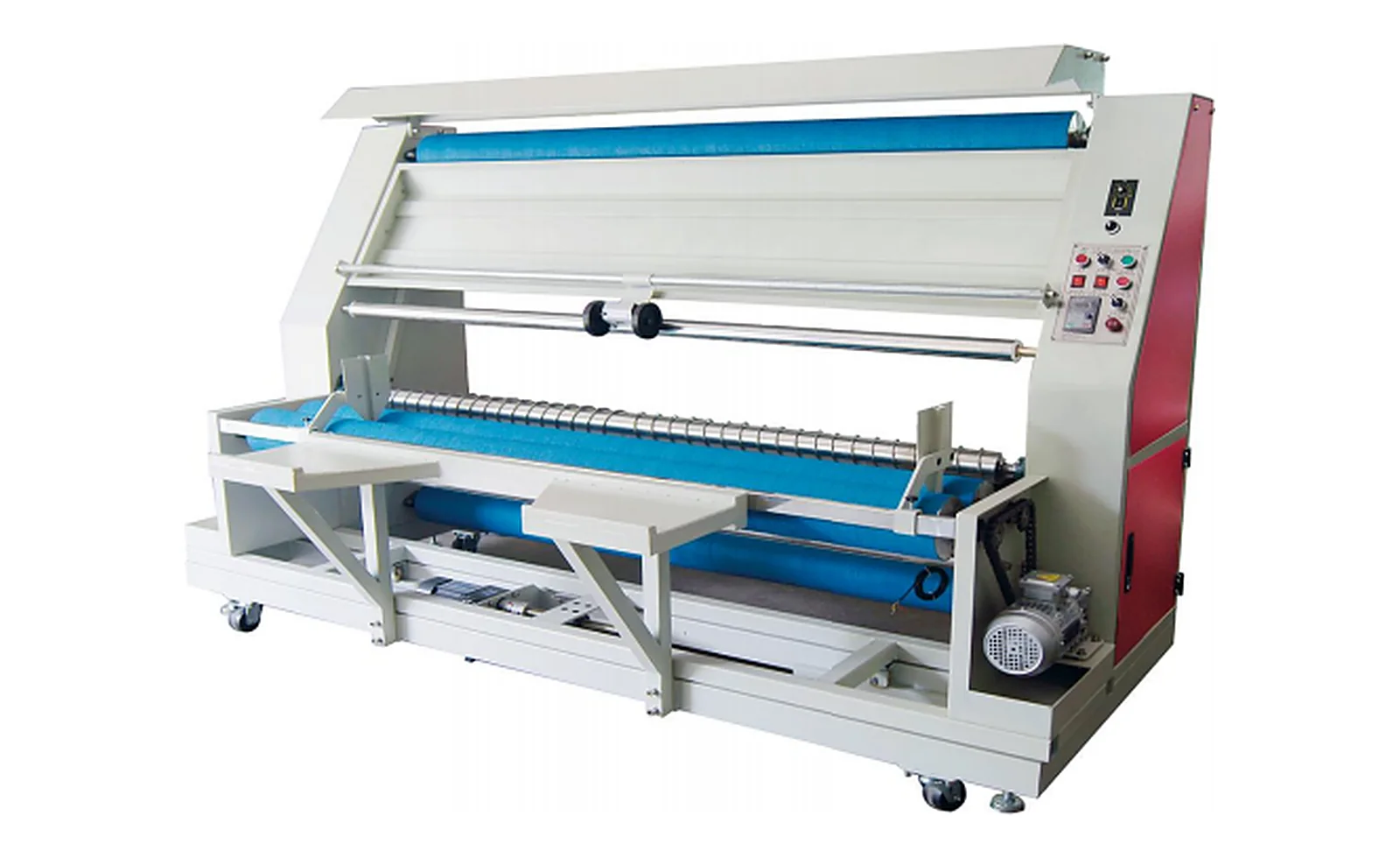 Fabric Inspection Machine
Designing Equipment to Meet Actual Production Goals
The Automatic Edge-alignment Multifunction Fabric Inspection Machine (Light-Based Inspection Model) is used for fabric inspection of the fabric rolls and rolling them up.It features an infrared automatic edge-alignment system to ensure neat fabric edges during rolling, and the fabric inspection table is equipped with high-quality light-transmitting materials and powerful upper and lower lighting to facilitate the detection of fabric defects and missed inspection areas during the rolling process.Upon completion of the fabric inspection, the machine automatically resets and shuts down. Fabric rolling supports both forward and reverse operations, facilitating the re-rolling and re-inspection of rolls where defects were missed;With a maximum unwinding diameter of 35 cm and external dimensions of 2400 × 435 × 1190 mm, it is suitable for fabric inspection and rolling operations involving apparel fabrics, home textiles, and standard bolt fabrics.
Equipment Advantages
- Automatic Infrared Edge-Alignment System:The machine employs an automatic infrared edge-alignment system that corrects the fabric edge position in real time during the rolling process, ensuring neat edges and reducing the need for repeated manual adjustments.
- Automatic Reset and Shutdown Upon Inspection Completion:Once fabric inspection is complete, the machine automatically resets and shuts down, eliminating the need for manual supervision. This allows operators to simultaneously handle other processes such as loading, dividing rolls, and packaging.
- Forward and Reverse Winding:The machine supports both forward and reverse winding. If a fabric roll is found to have been missed during inspection, it can be rewound for re-inspection, preventing defective rolls from entering subsequent production stages. This feature is ideal for orders with high fabric quality requirements.
- High-Quality Light-Transmitting Material and Top/Bottom Lighting:The fabric inspection table is equipped with high-quality light-transmitting material and powerful top and bottom lighting. The fabric surface is clearly visible under both transmitted and reflected light, aiding in the identification of common fabric defects such as holes, color variations, weft skew, and weaving flaws.
- Maximum Unwinding Diameter of 35 cm:Accommodates fabric rolls with a maximum diameter of 35 cm, meeting the fabric inspection and rewinding needs for standard apparel fabrics, home textiles, and bolt fabrics.
- Compact Design:With dimensions of 2400 × 435 × 1190 mm, the machine is narrow and tall, requiring minimal floor space and making it easy to integrate into fabric inspection workshops alongside fabric spreading, packaging, and cutting processes.
Applicable Industries and Use Cases
This machine is suitable for fabric inspection workshops in textile mills, printing and dyeing plants, garment factories, home textile factories, and fabric warehouses. It can be used for fabric inspection, rolling, surface defect detection, and roll preparation.The equipment is suitable for fabric inspection and rolling operations involving greige fabric, printed fabric, dyed fabric, and standard home textile fabrics. It is particularly well-suited for scenarios requiring simultaneous fabric inspection and rolling, as well as the re-rolling and re-inspection of fabric found to have defects.Before actual use, the equipment configuration should be confirmed based on the fabric roll width, maximum roll diameter, fabric weight, and the direction of fabric flow in and out of the workshop.
Technical Specifications
| Edge Alignment Method | Fabric Inspection Lighting | Winding Operation | Maximum Unwinding Diameter | Dimensions |
|---|---|---|---|---|
| Infrared Automatic Edge-Alignment System | High-quality light-transmitting material + powerful top and bottom lighting | Can be operated from the front or back, facilitating re-inspection during rewinding | 35 cm | 2400 × 435 × 1190 mm |
Note:The above specifications are for reference only and represent standard configurations. Applicable fabric width, unwinding diameter, lighting configuration, edge-alignment method, automatic shutdown mode, and machine dimensions may be adjusted based on the actual fabric type, roll weight, and customization requirements. Final specifications are subject to technical confirmation and the terms of the contract.
Operating and Safety Instructions
Before loading or threading the fabric, stop the machine and disconnect the power supply. Ensure the fabric roll is securely positioned and that the fabric guide rollers and inspection table are clean and free of foreign objects. The fabric inspection lights and light-transmitting table surface may become hot after prolonged use; when changing fabric rolls or cleaning the table, stop the machine first and wait for the light box to cool down to avoid burns.During operation, keep hands, sleeves, scarves, or other loose items away from rollers and drive components; stop the machine before addressing fabric wrinkles, seams, or misalignment. Before using the rewinding re-inspection function, verify that the fabric roll is feeding in the correct direction to prevent deformation caused by reverse tension on the fabric.After moving the equipment, lock the casters and adjust the leveling feet; ensure the machine is stable before restarting. Additionally, follow workshop requirements for grounding, moisture protection, and routine lubrication maintenance.
Selection Recommendations
When selecting a model, first confirm that the maximum diameter of the fabric roll does not exceed 35 cm, and verify the roll’s width, weight, fabric type, workshop aisle dimensions, and equipment installation space.For orders requiring leak detection and rewind re-inspection, prioritize confirming the ease of operating the fabric roll in both forward and reverse directions, as well as the operating position; for light-colored fabrics with fine weaving defects, it is recommended to verify that the brightness of the top and bottom lights and the configuration of the light-transmitting work surface meet fabric inspection requirements.In scenarios requiring integration with fabric spreading machines, fabric winders, or cutting lines, also confirm the equipment height, fabric entry and exit directions, and fabric inspection speed. For special widths or fabric types, provide actual fabric and roll information prior to purchase to determine whether a custom configuration is needed.
Scope of Application
The Automatic Edge-Alignment Multifunction Fabric Inspection Machine (Light Inspection Type) is suitable for fabric inspection, rolling, surface defect detection, and roll preparation in fabric inspection workshops. It can also be used in garment factories, home textile factories, and fabric warehouses for incoming material inspection, rolling by meterage, and the transfer of rolled fabric.The combination of infrared automatic edge alignment, top and bottom lighting for defect detection, and pre- and post-rewinding operations makes this machine ideal for small- to medium-batch and mass production scenarios with high requirements for fabric surface quality and roll neatness.
To confirm the inspection lighting, edge-alignment methods, unwinding diameter, and rewinding re-inspection configurations of the Automatic Edge-alignment Multifunction Fabric Inspection Machine, please refer tothe Fabric Inspection Machine product categories, or viewthe Multifunction Fabric Inspection Machines and Fabric Spreading Machines. Youmay alsocontact usfor model selection recommendations, fabric roll compatibility verification, and quotation proposals.
Configured for stable mass production
- Infrared automatic edge-alignment system ensures neat fabric edges when rolling
- Automatically resets and stops the machine after fabric inspection is complete
- The fabric roll can be operated in both forward and reverse directions, facilitating the rewinding and re-inspection of fabric with defects
- High-quality light-transmitting material with powerful top and bottom lighting
- Top and bottom lights work in conjunction with the light-transmitting table to detect defects
- Maximum unwinding diameter: 35 cm
- Dimensions: 2400 × 435 × 1190 mm
Matching Processes to Material Properties
Expand Modules According to Production Line Requirements
Frequently Asked Questions About “Fabric Inspection Machine”
12 What is the main purpose of a fabric inspection machine?
Before cutting or heat-transfer printing, identify any defects, color variations, width issues, and roll-related problems in the fabric to minimize rework in subsequent processes a… Read the full answer
13 What is the purpose of automatic edge alignment? Is it necessary to include it?
The automatic edge-alignment system uses infrared edge detection for automatic edge correction, ensuring that the rolled fabric has straight edges and is tightly rolled (the automa… Read the full answer
14 What is the difference between a simple fabric unwinder and a fabric inspection machine?
A simple fabric unwinder is designed solely to unroll fabric rolls and feed them at a set speed (maximum unroll diameter: 40 cm); a fabric inspection machine adds an inspection sta… Read the full answer
15 What is the purpose of fabric inspection under a light? Is it worth adding?
Models equipped with lighting and light transmission devices can detect issues such as uneven thickness and weaving defects that are easily missed by the naked eye. For mid- to hig… Read the full answer
16 What should I do if a roll of fabric is too heavy or irregularly packed to move?
Choose a model equipped with automatic edge alignment and a high-power gearmotor (such as the 2.2 kW model); this provides greater stability when baling heavy or irregularly shaped… Read the full answer
Inquire about the detailed specifications for this device
Please provide us with the material, roll width, speed, and target production capacity, and our engineers will evaluate the equipment configuration and delivery time.
- One-on-One Engineer Evaluation
- Configuration Plan Based on Materials and Production Capacity
- We will respond within one business day
You can also contact us directly
- Email [email protected]
- Phone +86 13713137075
- WhatsApp +86 13713137075