

































Rotary Heat Transfer Machine Shipment Cases
Recently, Zhishang Technology completed the shipment of two batches of dye-sublimation Drum Transfer Machines. One batch consisted of four 200×1700 mm units, which were shipped to Guangzhou by truck;the other consisted of 420×1700 mm wide-format machines, along with some consumables, shipped to Mexico in a full 40HQ container. Since the equipment specifications and shipping methods differed for the two orders, the packaging, box number labeling, space planning, and packing lists needed to be verified separately.
Overview of Shipping Information for Both Batches
| Item | Guangzhou Shipment | Mexico Shipment |
|---|---|---|
| Equipment Type | Dye-Sublimation Roller Transfer Machine | Dye-Sublimation Roller Transfer Machine |
| Equipment Specifications | 200 × 1700 mm | 420 × 1700 mm |
| Quantity and Shipping | 4 units, loaded onto a truck | Equipment comes with some consumables; shipped in a 40HQ full container |
| Delivery Terms | Domestic transport to Guangzhou | Export container shipping to Mexico |
Case 1: 4 units loaded onto a truck for shipment to Guangzhou
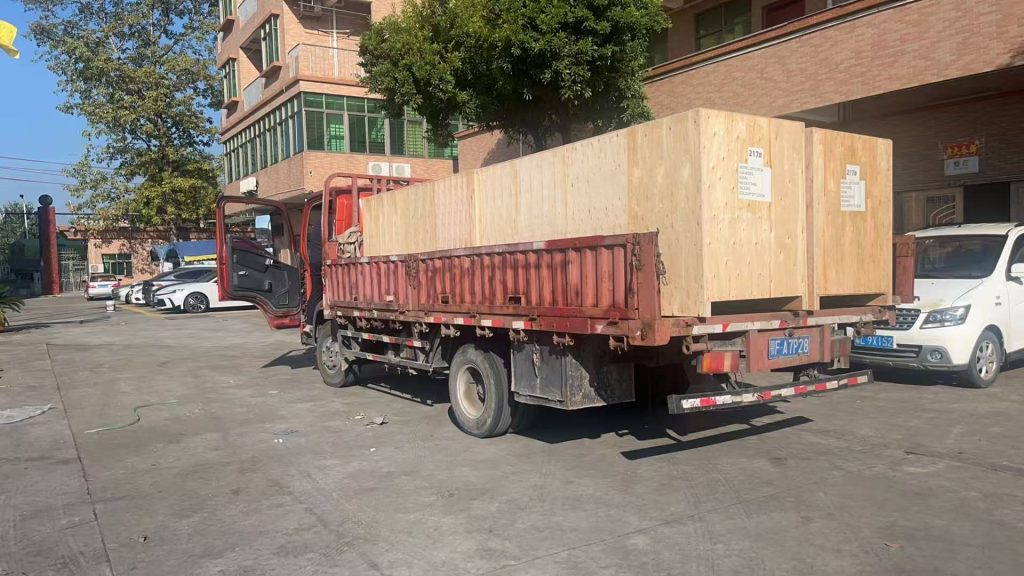
The Guangzhou shipment consists of 4 thermal sublimation Drum Transfer Machines, each with dimensions of 200 × 1700 mm. The equipment is packed in wooden crates, with model numbers, packaging details, and shipping marks clearly marked on the crates to facilitate quick identification during loading, arrival, and on-site inventory checks.
Packaging and Loading Highlights
On-site photos show that some of the equipment’s wooden crates have already been loaded onto the truck.Due to the large packaging dimensions and weight of wide-format equipment, the placement on the truck bed must be planned based on the external dimensions of the wooden crates prior to loading, and the orientation of the crates, bottom support, and securing methods must be verified. When shipping multiple units of the same type together, the sequence of crate numbers should match the packing list to avoid the need to repeatedly search for corresponding equipment upon arrival.
Labels on the exterior of wooden crates must include the equipment model, crate number, or order identification information. When the customer signs for the shipment, they should first verify the number of crates and labels against the list before proceeding to unpacking, positioning, and installation.
Case Study 2: Full Container Load of Wide-Format Equipment and Consumables Shipped to Mexico
The equipment for the Mexico shipment measures 420 × 1,700 mm and was shipped alongside some consumables. Photos of the container loading show that the equipment wooden crates and bagged consumables were placed inside the same 40HQ container, with the container doors and crate labels clearly visible.
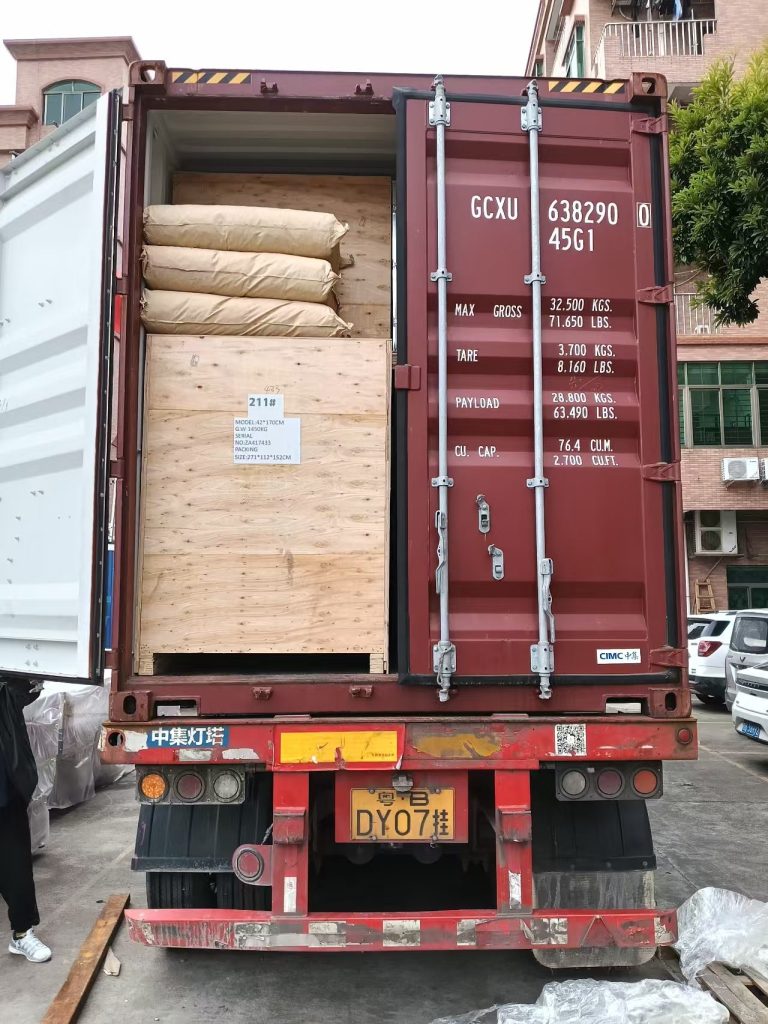
Full Container Load (FCL) Loading Method
The equipment is packed in wooden crates, while the consumables are packed in bags or other individual packaging. During container loading, positions are allocated based on the equipment’s external dimensions, weight, and available space within the container. The equipment and consumables are placed in separate sections, which not only facilitates inventory verification upon arrival at the port but also minimizes the risk of different packages crushing each other during transit.
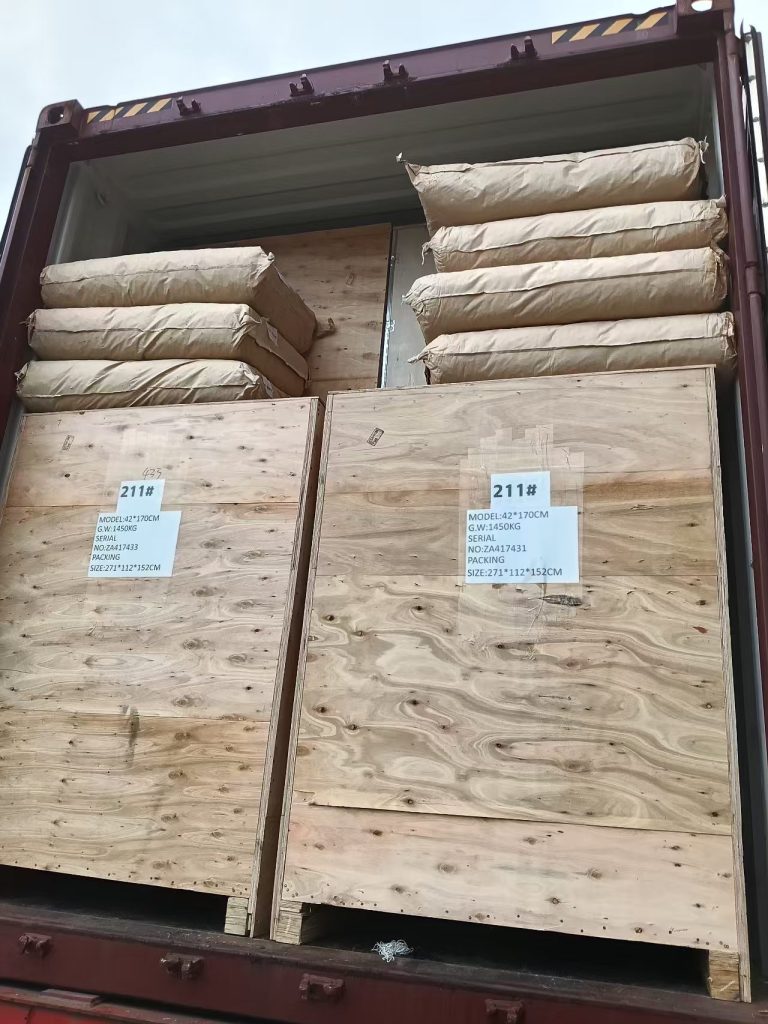
Shipping Equipment and Consumables in the Same Container
For projects involving the simultaneous procurement of equipment and consumables, placing the main unit and its corresponding consumables in the same container allows customers to verify the goods against a single packing list and facilitates verification of consumable specifications during subsequent installation, commissioning, and trial production phases. The specific types and quantities of consumables are determined by the order configuration and the packing list.
Details to Verify Before Shipping Wide-Format Equipment
- Confirm equipment specifications, working width, roller parameters, voltage, and frequency, and verify that each item corresponds to the technical specifications in the order.
- Verify the external dimensions, weight, forklift access points, and lifting markings of the wooden crates to ensure they can be safely loaded onto trucks or into containers.
- Check the wooden crate labels, crate numbers, and packing list to ensure consistency in model numbers, quantities, accessories, and consumables lists.
- Package equipment and consumables in separate sections; ensure consumables are protected from moisture and individually secured to prevent direct contact with metal structural components.
- Take photographs before and after loading onto the truck or into the container for record-keeping, documenting the condition of the container doors, the crate body, labels, and securing status.
- Prepare shipping documentation to accompany the shipment, including the packing list, equipment inventory, operating manuals, and necessary customs clearance documents.
Why Is Shipping Planning More Critical for Wide-Format Equipment?
Wide-format Drum Transfer Machines have large outer packaging dimensions, and the drums, frame, drive, and electrical components must remain protected throughout the entire shipping process. Wooden crates provide external support for the equipment, while internal securing and moisture-proofing measures determine the condition of the equipment after transshipment, loading/unloading, and extended transit.
The loading methods for the Guangzhou and Mexico shipments differed, but the core approach remained consistent: first, plan the shipping space based on the equipment’s dimensions and weight; then, establish verifiable shipping records through clear crate numbers, labels, and packing lists.
View More Roller Transfer Machine Shipping Cases
We continuously document the shipping processes for equipment of various specifications, consumable configurations, and destinations. You can reviewour collaboration case studiesor refer tothe shipment records for the complete production line and matching consumables to Mexico, as well asthe case study involving multiple machinesshipped from the Port of Guangzhou to Mexico.
Get a Delivery Plan for Similar Equipment
If you need to evaluate delivery solutions for equipment with similar specifications or full-container loads, please provide the fabric type, working width, roller specifications, planned production capacity, voltage and frequency, destination, and whether compatible consumables are required. You can also first browsethe sublimation roller Transfer Machine product categories, then contactZhishang Technologyto confirm packaging, transportation, and delivery requirements.