

































How to Choose a Rotary Heat Transfer Printing Machine?
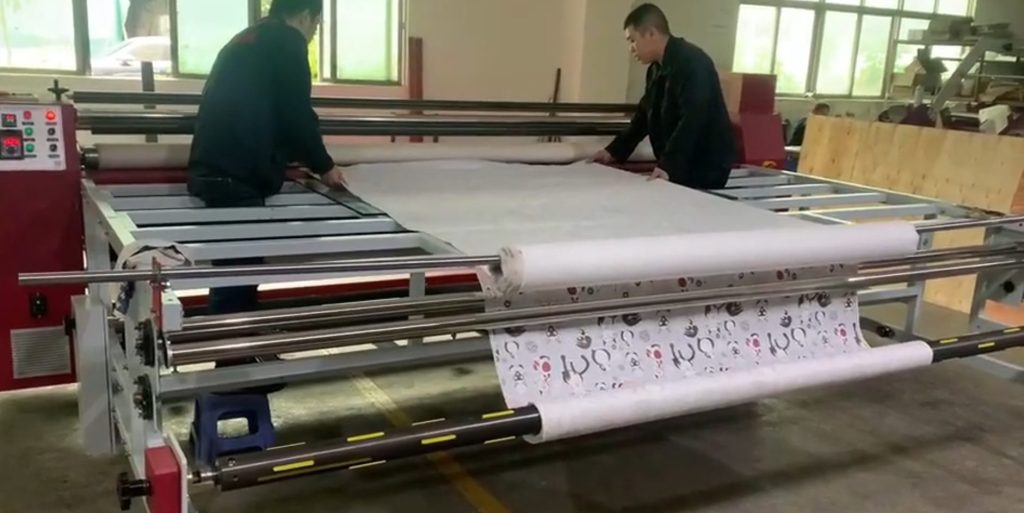
Rotary heat transfer printing machines use high temperature and pressure to sublimate the disperse dyes on the transfer paper and fix them onto synthetic fabrics.When purchasing, do not focus solely on maximum speed; instead, confirm the fabric type, effective width, order structure, target color difference, and end use before deciding on the roller, tension, web guiding, and automation configurations.
First, confirm suitable fabrics and process limits
Traditional disperse dye sublimation is primarily suitable for polyester (polyester fiber) and polyester-blend fabrics, such as sportswear, swimwear, flags, home textiles, and soft signage. Natural fibers cannot directly adopt this dyeing mechanism; therefore, the process route should be determined based on the final fabric before purchasing.
For 100% cotton or high-cotton-content blends,DTG (direct-to-garment) printingis typically the preferred choice;however, alternatives such as DTF may also be evaluated based on the design, colors, and order volume. Even for coated cotton fabrics, colorfastness, hand feel, and wash resistance should be tested separately; standard sublimation parameters cannot be directly applied to 100% cotton orders.
Determine the drum and effective width based on the order structure
Cylinder Diameter and Effective Width
Common drum diameters are 800 mm, 1000 mm, and 1200 mm. Diameters of 800–1000 mm are better suited for small batches, multiple varieties, prototyping, or narrow-width products;for continuous production of lightweight synthetic fabrics requiring extended heat contact time, configurations ranging from 1,000 to 1,200 mm should be prioritized. The final selection must also consider fabric weight, elasticity, transfer speed, and available factory space.
The effective working width should cover the finished width of the primary fabric and allow for necessary operational clearance. The value of wide-width equipment lies in consistent center-to-edge uniformity, not simply in specifying the largest possible nominal width.
Nominal speed is not equivalent to the number of qualified meters delivered per day. Preheating, roll changes, cleaning, temperature adjustments, and scrap calculations all affect actual production capacity; refer tothe Analysis of Qualified Production Capacity and Energy Consumption for Heat Transfer Equipmentfor detailed calculation methods.
How to Inspect an Oil-Heating System
Continuous-production roller transfer presses typically use thermal oil heating. When selecting a model, consider the actual temperature distribution across the roller surface and the system’s ability to recover temperature after continuous operation; do not rely solely on the settings displayed on the control panel. During formal acceptance testing, record the actual measured temperatures at the center and both ends of the roller after cold start-up, during stable operation, and after a job change.
How to Verify Tension, Web Guidance, and Temperature-Pressure-Speed Parameters
Fabric and Transfer Paper Tension
Fabric tension must remain stable during the three stages of unwinding, entry into the cylinders, and rewinding. When the roll diameter changes, the servo tension system must automatically adjust the unwinding resistance. While production is possible using only a magnetic powder clutch, it requires more frequent manual adjustments during roll changes and job changes; this approach is suitable for production scenarios with lower configuration requirements and relatively stable batches.
Automatic Web Guidance for Transfer Paper
For orders involving pattern alignment (such as checkered or striped patterns), solid-color backgrounds, or continuous long patterns, special attention should be paid to the automatic web guiding capability of the printing paper. During acceptance testing, have the equipment run continuously for at least one full roll of paper to observe whether the paper edges drift or the patterns shift out of alignment, and record the number of times the operator needs to make manual adjustments.
Pressure and Speed
Pressure should be adjusted to match the fabric’s thickness, elasticity, width, and the characteristics of the transfer paper. Excessive pressure on thin fabrics can cause glossing, deformation, or a loss of hand feel, while insufficient pressure on thick fabrics may result in faint printing and poor colorfastness. During equipment acceptance, focus on pressure stability during continuous operation rather than simply comparing tonnage.
Temperature typically needs to be determined based on the fabric, ink, transfer paper, and testing standards. Even when the equipment is running at its maximum speed, verify that temperature, tension, and pattern clarity remain stable; configurations that can only meet customer standards by reducing speed should not be used to calculate actual production capacity based on maximum speed.
Quick Selection Chart
| Order Characteristics | Priority Configuration | Acceptance Focus |
|---|---|---|
| Prototyping, small batches, multiple varieties | 800–1000 mm; easy job changeovers and cleaning | Repeatability, heating rate, changeover scrap |
| Lightweight sportswear, swimwear | Longer heat contact area, servo tension | Elastic recovery, hand feel, and wash fastness |
| Wide-width home textiles, flags | Matches finished fabric width; oil-heated rollers | Color variation between center and edges, pressure stability |
| Pattern registration (checkered, striped, and solid-background designs) | Automatic web guidance and stable tension for printing paper | Position deviation during continuous operation; alignment of front and back sides |
| 100% cotton or high-cotton-content blends | Separate evaluation of DTG, DTF, and other processes | Color fastness, hand feel, color coverage, and whiteness |
Pre-purchase sample verification is mandatory
Parameter tables are for preliminary screening only; final conclusions must be based on continuous prototyping conducted on the same model of equipment, using actual production-grade fabric, and at the target production speed.
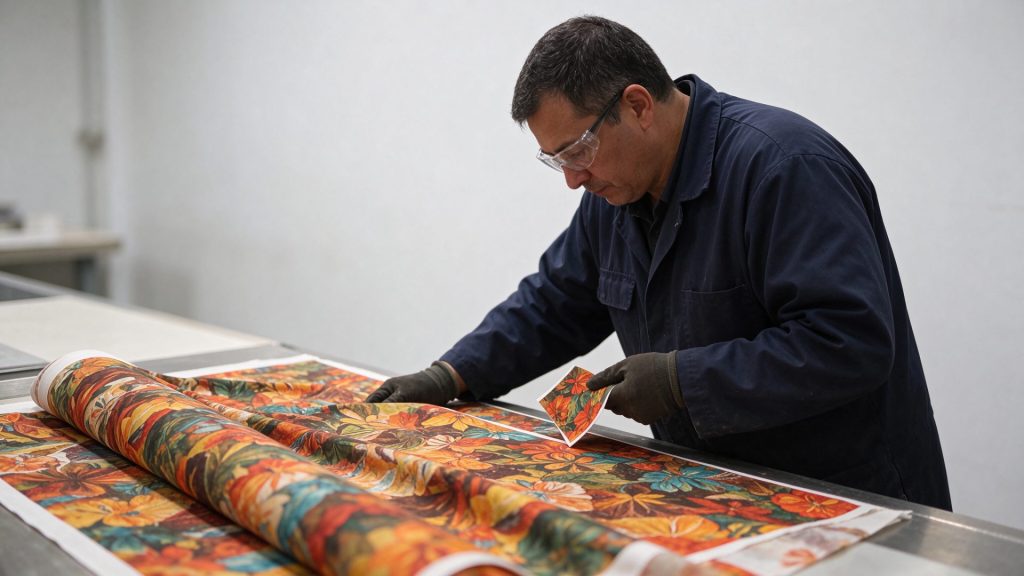
- Prepare at least 50 meters of actual production fabric and matching transfer paper; do not use the ideal test materials provided by the supplier.
- Run continuously on the same model of equipment at the target production speed and observe performance during warm-up, operation, and roll changes.
- Check for fabric edge wrinkles, pattern registration, color uniformity, hand feel, and whether color shows through on the front or back.
- Test wash fastness according to customer requirements and end use; testing standards may be ISO 105-C06 or AATCC 61; a grade of 3 or higher is generally accepted, but the contract and customer standards shall prevail.
- Document the fabric batch, transfer paper, temperature, pressure, speed, test method, and sample fabric for use as the basis for mass production parameters.
Continue cost calculations based on the specific product and budget
If you have determined that continuous production of synthetic fabrics will be the primary focus, reviewthe product categories for sublimation drum transfer machines and refer to the ZS-BD Deluxe Edition drum transfer machine to understandthe configuration for wide-width continuous production.When estimating procurement costs, please cross-referencethe prices and configuration guidesfor drum heat transfer machines rather than simply comparing base quotes for the entire machine.
The final model selection also depends on fabric composition, weight per square meter, width, order volume, color standards, and target market. Submit the actual fabric and order requirements to the equipment manufacturer;contact Zhishang Technologyto arrange a sample run using your material, and then confirm the roller size, heating system, web guiding, and automation configuration based on the test results.